
Why Visit Ouro Preto, Most Beautiful City in Brazil
Before leaving on our extensive road trip through the historic state of Minas Gerais, I sat at the dining room table with my brother-in-law’s mother, studying the map of our anticipated route. She spoke Portuguese slowly, the pace of an elderly woman eager to share past experiences with a new friend. As her finger traced the many roads that she had driven on her own trip through Minas Gerais, she announced, “There were two places I always wanted to see in my life: Macchu Pichu and Ouro Preto. And I’ve seen both.” Ouro Preto, really? I soon discovered that Ouro Preto might be the most beautiful city in Brazil. Here’s why you should visit Ouro Preto and an overview of what to do in Ouro Preto.

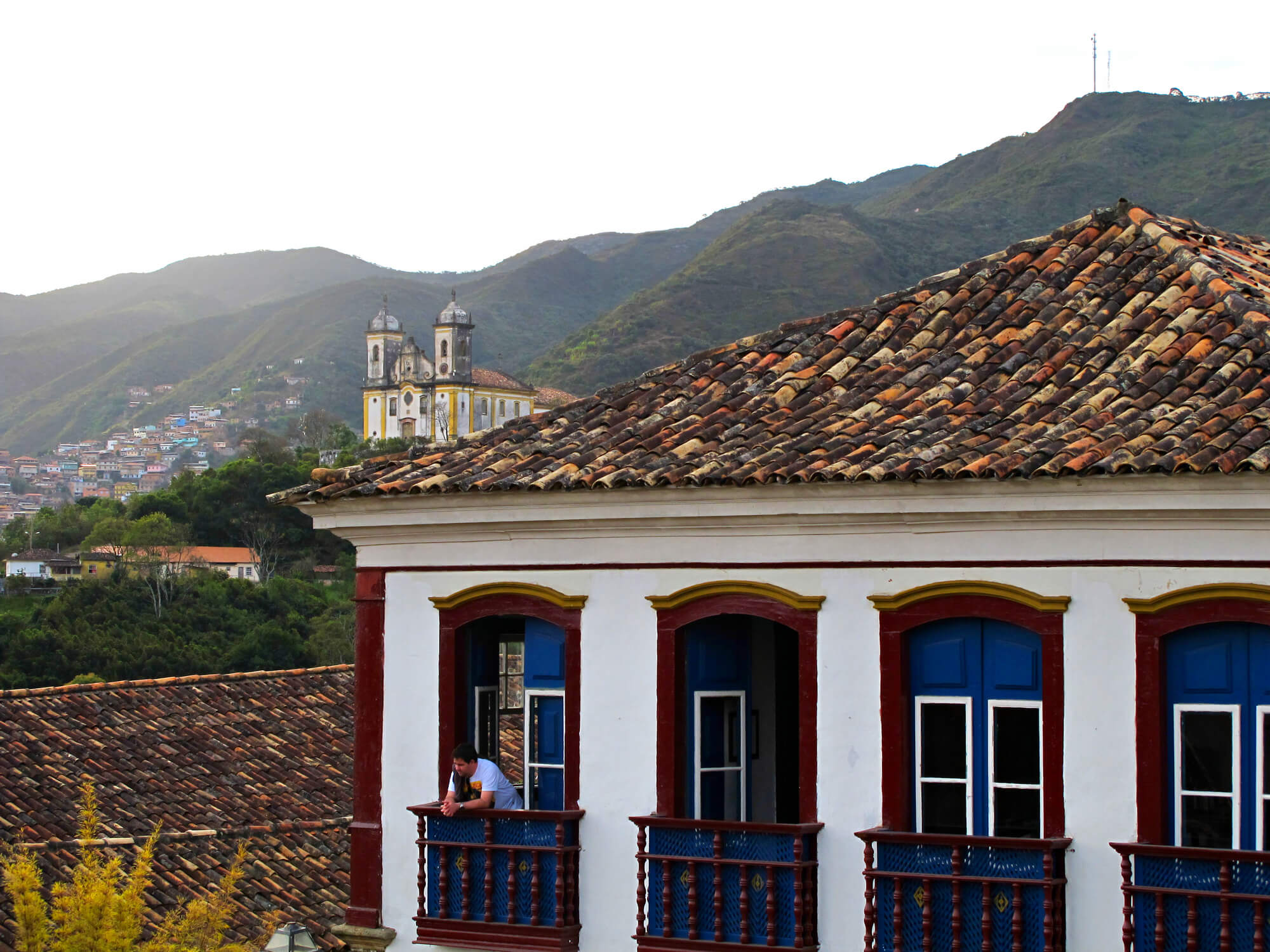
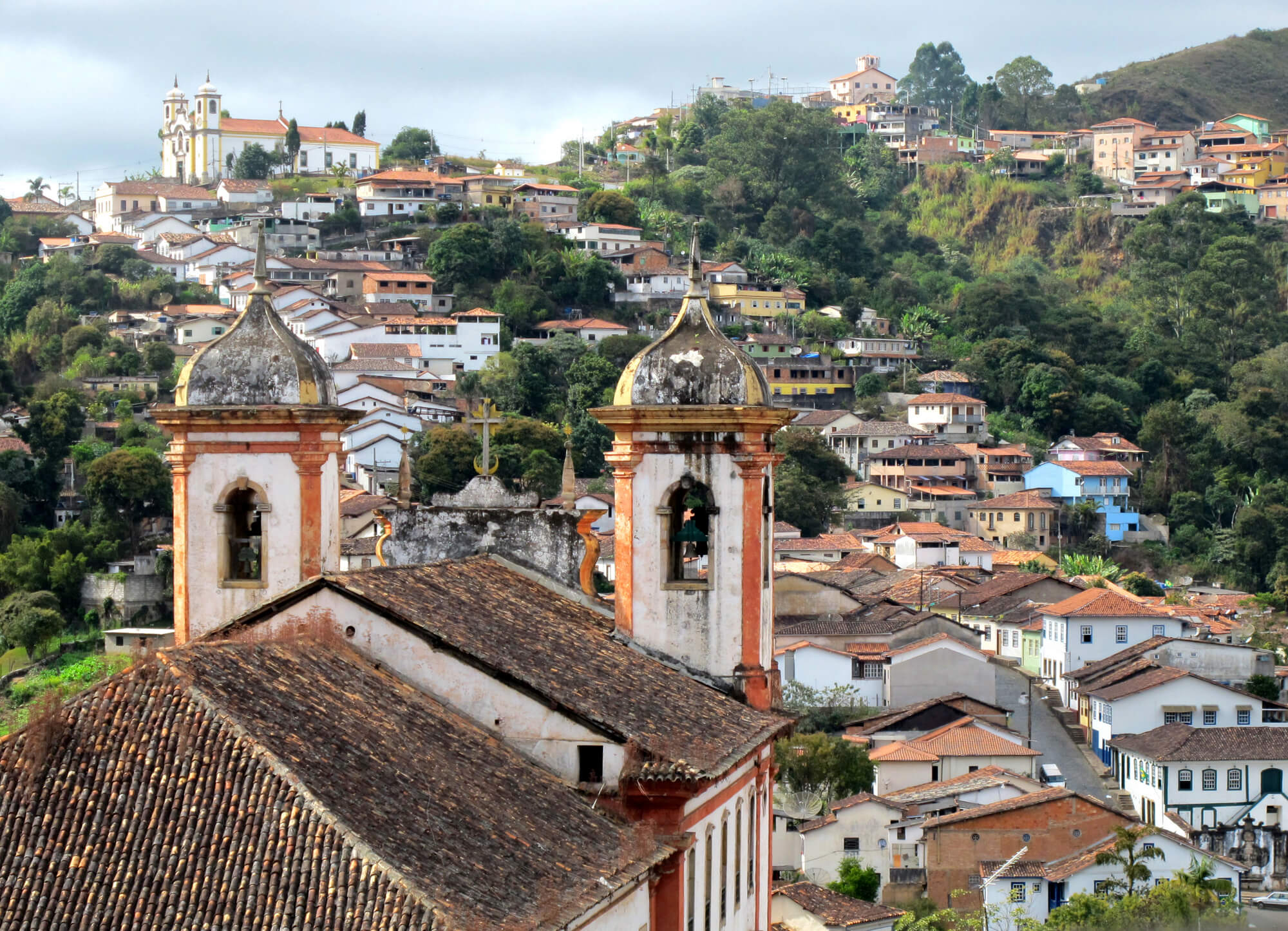
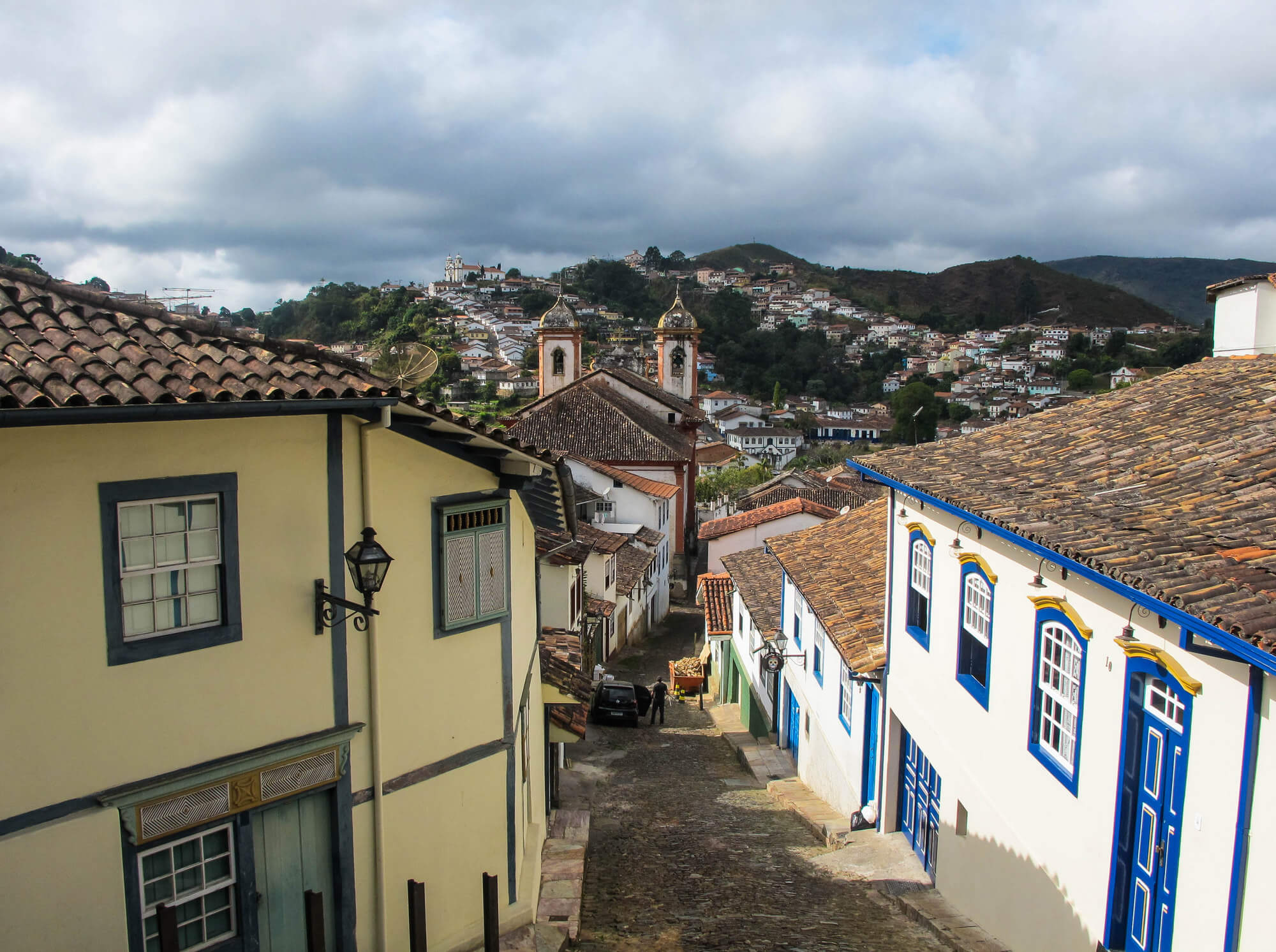
Ouro Preto lived up to the hype, and it should, considering the entire town is a UNESCO World Heritage Site. Ouro Preto might be the most beautiful town in Brazil, a mix of preserved architecture and precious art in a striking urban landscape of cobblestone hills nestled in the surrounding mountains. There is no shortage of things to see and do in Ouro Preto.
Unlike almost every other place in Brazil that I’ve visited, Ouro Preto strikes that perfect combination of a place where people clearly live (including about 15,000 university students) and a place where tourism thrives. Ouro Preto is small and organized enough to be seen in two or three days but special enough to warrant the long drive it takes to get here.
Why visit Ouro Preto?
Ouro Preto is a center of Brazilian history. While Americans go to Philadelphia and Washington, D.C. to see our history, Brazilians go to Ouro Preto. This town was the center of what was then (the 1690s) the largest gold discovery in the western hemisphere, and the town developed in the early 1700s as a result of the wealth from this gold rush.
Artists and the elite from Europe came to Ouro Preto, fostering Brazilian Baroque and Rococo art to develop here. The town’s many churches are what it’s most famous for, especially those with the work of Brazil’s most famous artist, Antonio Francisco Lisboa, who is called Aleijadinho.
In 1789, Ouro Preto was the symbolic center of the Brazilian independence movement, called the Inconfidência Mineira in 1789, a Brazilian independence movement. Later, in the 19th and 20th centuries, Ouro Preto’s isolated location led to an economic downturn. This lack of development had a silver lining because it allowed for the preservation of the town’s original layout and the impressive colonial architecture.
What to do in Ouro Preto
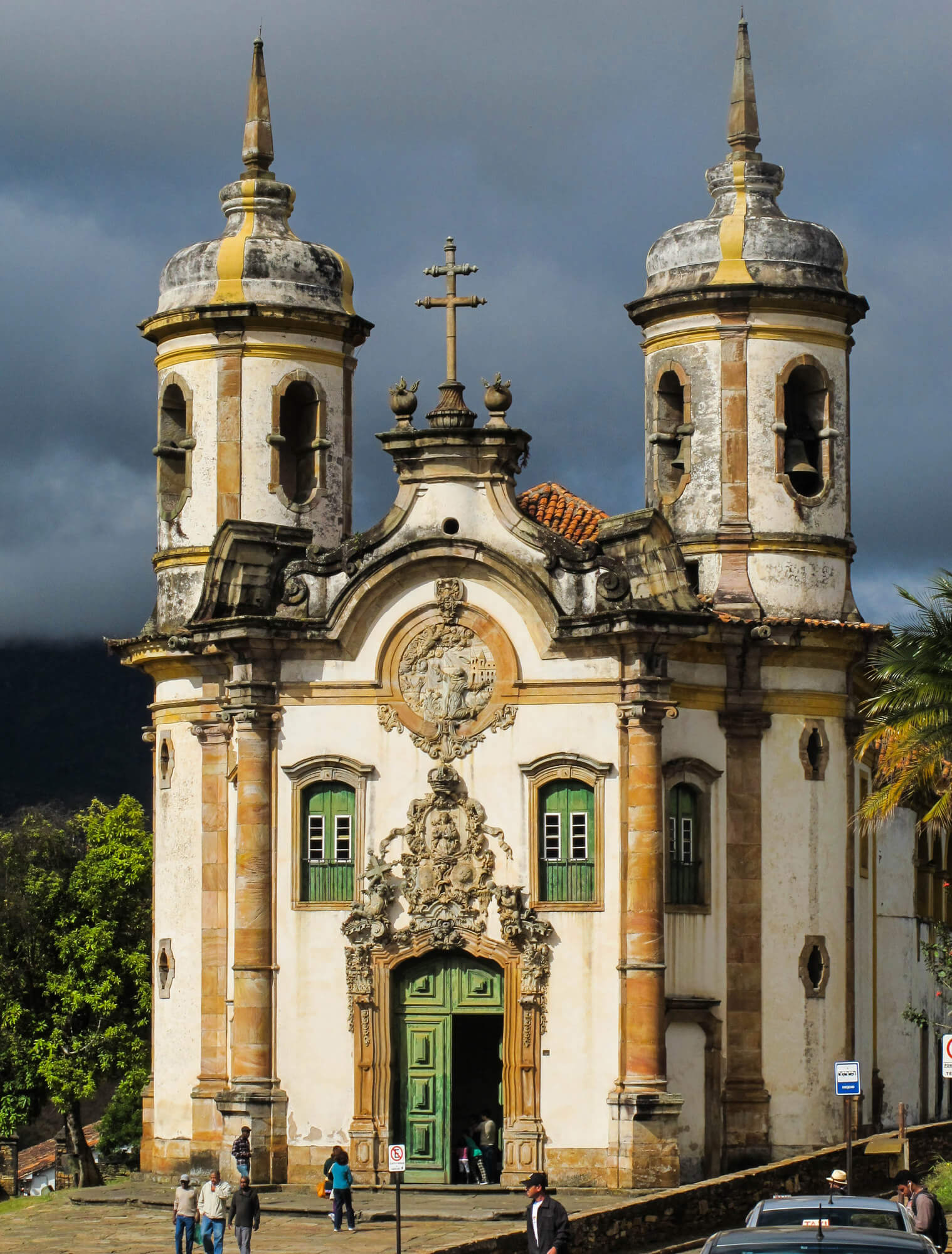
Igreja de São Francisco de Assis
Aleijadinho’s masterpiece in Ouro Preto is the Church of St. Francis of Assisi (Igreja de São Francisco de Assis). He designed and carved the exterior, including the soapstone sculptures on the facade.
Unfortunately, I wasn’t able to learn everything about the city’s churches because we hired Portuguese-speaking guides (I was traveling with Brazilian family members), and English information on these churches is lacking, but if you go, hire English guides at the tourist office. (Just next to the church is a very good restaurant, Bené da Flauta.)
Handicrafts Market
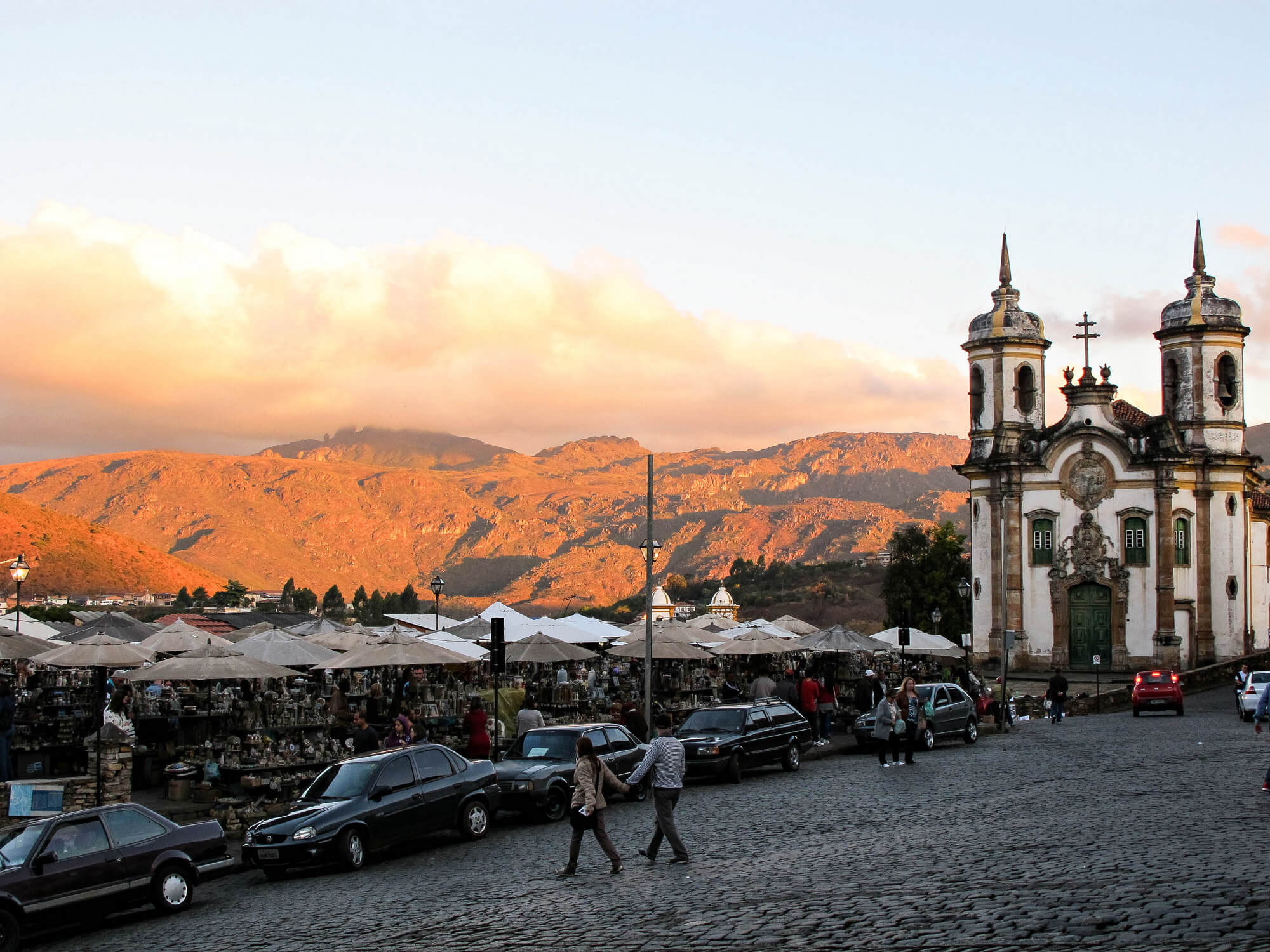
Across the street from the church is the feira, or outdoor market, which sells local handicrafts, especially items made from soapstone. You can watch people carving soapstone while you browse. The handicrafts are not expensive and make nice gifts that are very typical of this area. The market is open daily from morning to dusk.
Praça Tiradentes
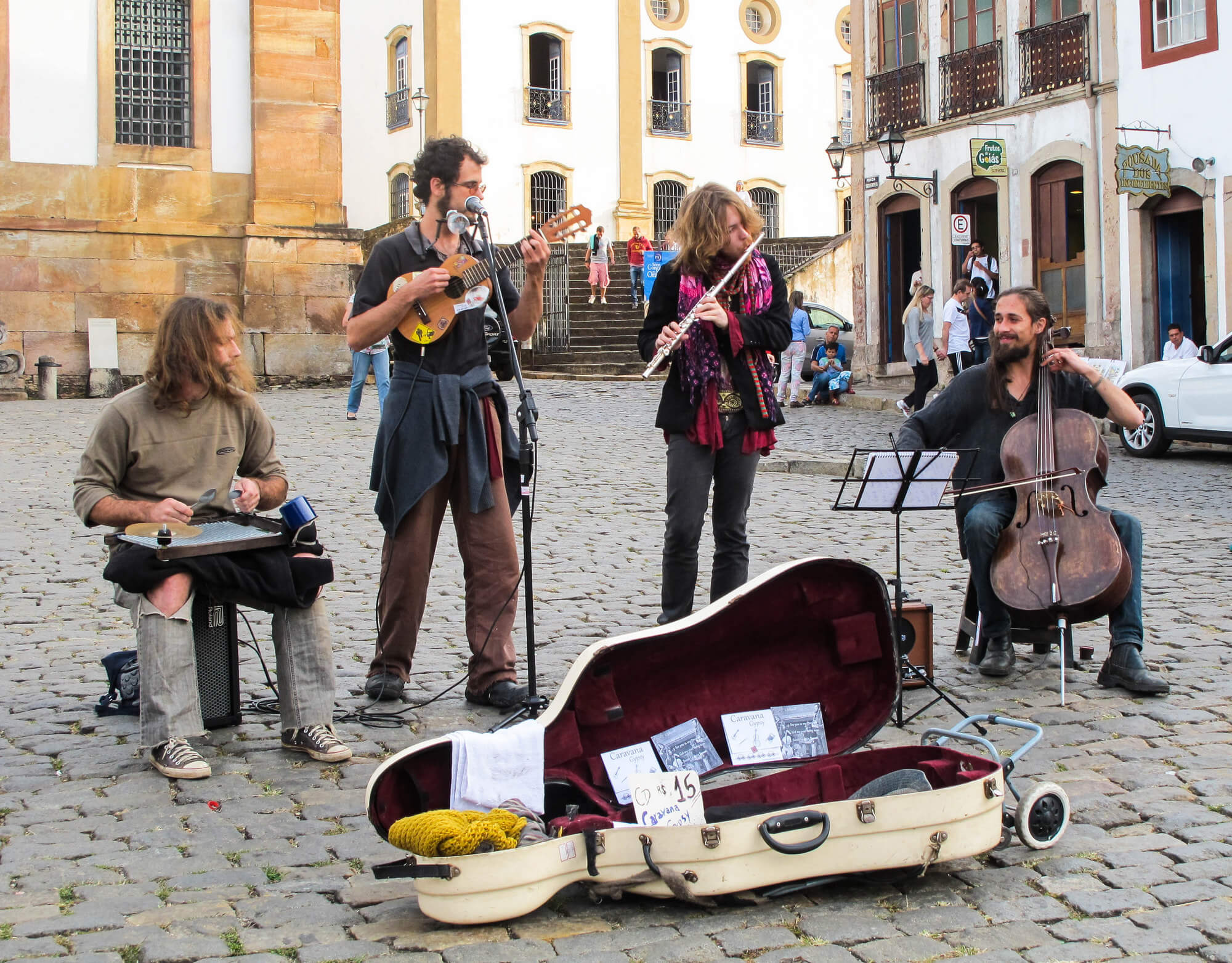
In the center of town is the main square, named after former resident Tiradentes, a leader of the 1789 attempted revolution. It has two large monuments on either end and a nice array of shops and cafés on its sides. Make time for the ice cream shop, which sells dozens of flavors, mostly containing fruits from the Amazon. Ouro Preto is a university city, and you can get a feeling for local life at the corner cafés.
The Museum of the Inconfidência independence movement (Museu da Inconfidencia) is a large building from 1784. It contains the tomb of Tiradentes and historical artifacts from the movement, including torture instruments and important art works. Open Tuesday-Sunday 12:00-5:30.
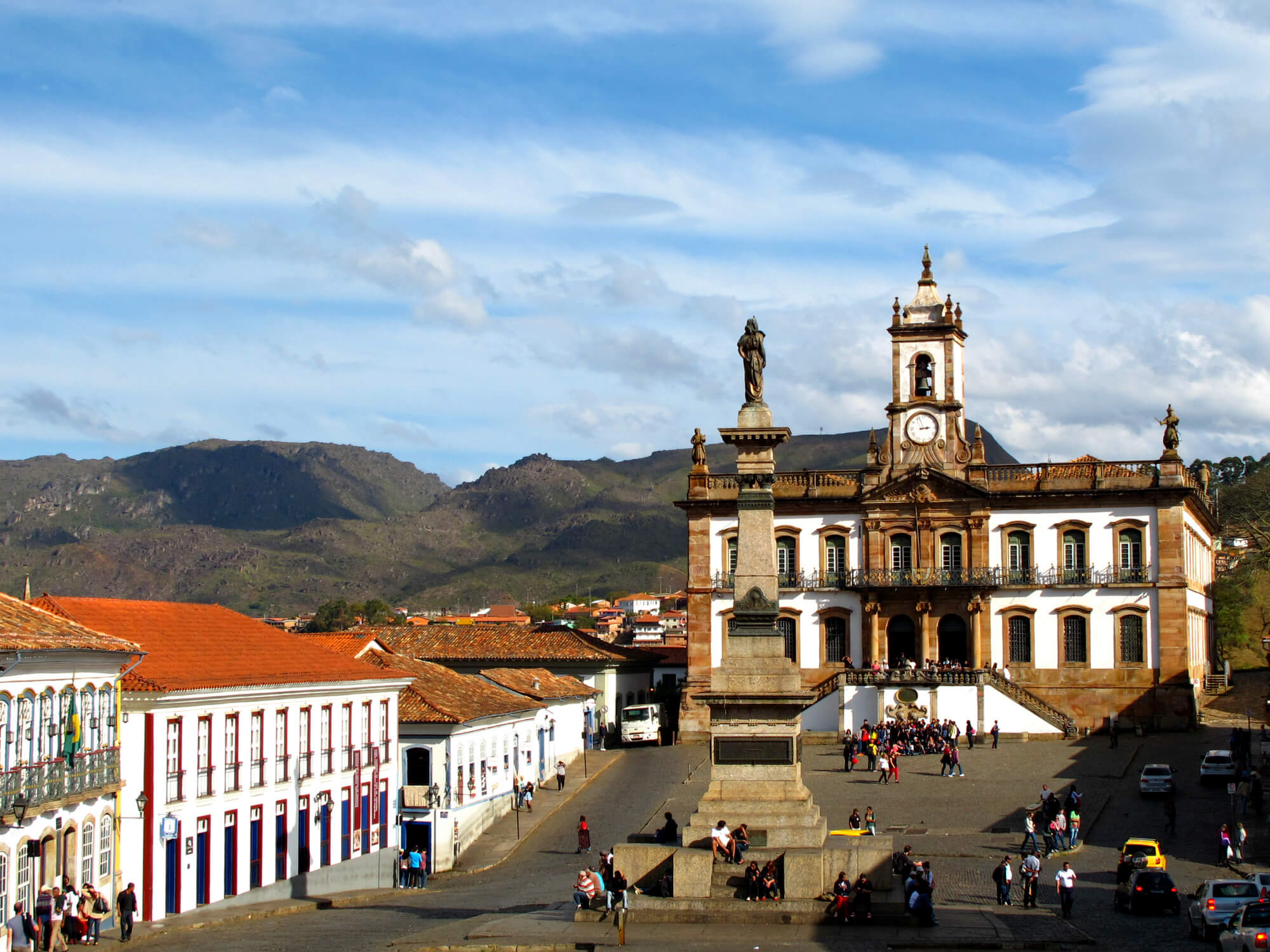
The center of the square contains a monument commemorating Tiradentes.
On the other end of the square is the old university, which now houses the Museu Mineralógico Da Escola De Minas (Mineralogy Museum). Because this area has such rich mines, you can see beautiful examples of all kinds of minerals in this museum, some from the surrounding area and others collected from around the globe.

Adjacent to the Museu de Inconfidência is the church of Nossa Senhora do Carmo (Our Lady of Mount Carmel). Besides being one of Ouro Preto’s most beautiful churches, its hilltop location allows for views of the town and surrounding hills.

The wall along the front of the church is a nice place to sit to watch the sun set and take in the surrounding views in the evening light.
Ouro Preto’s Two Sides
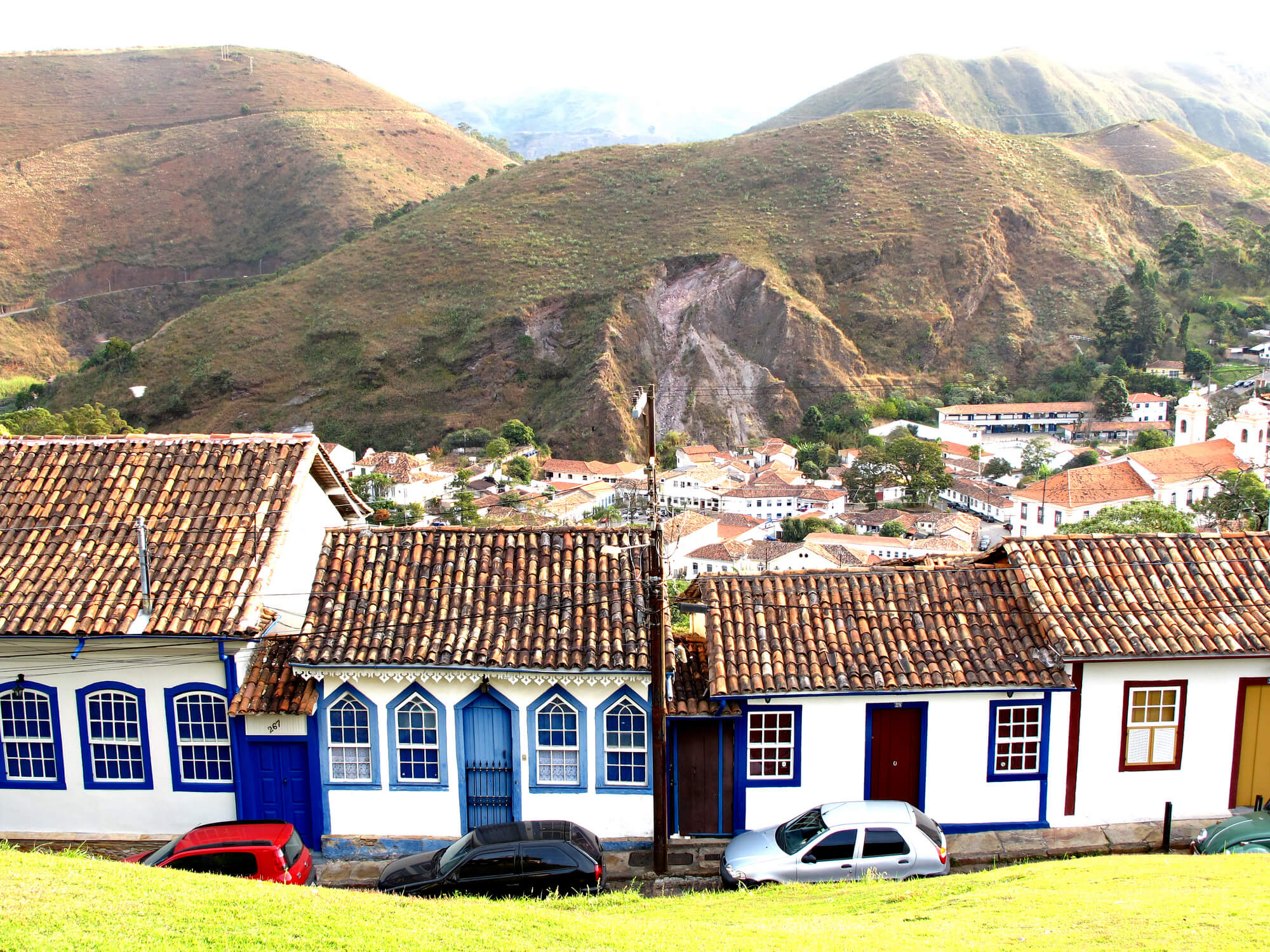
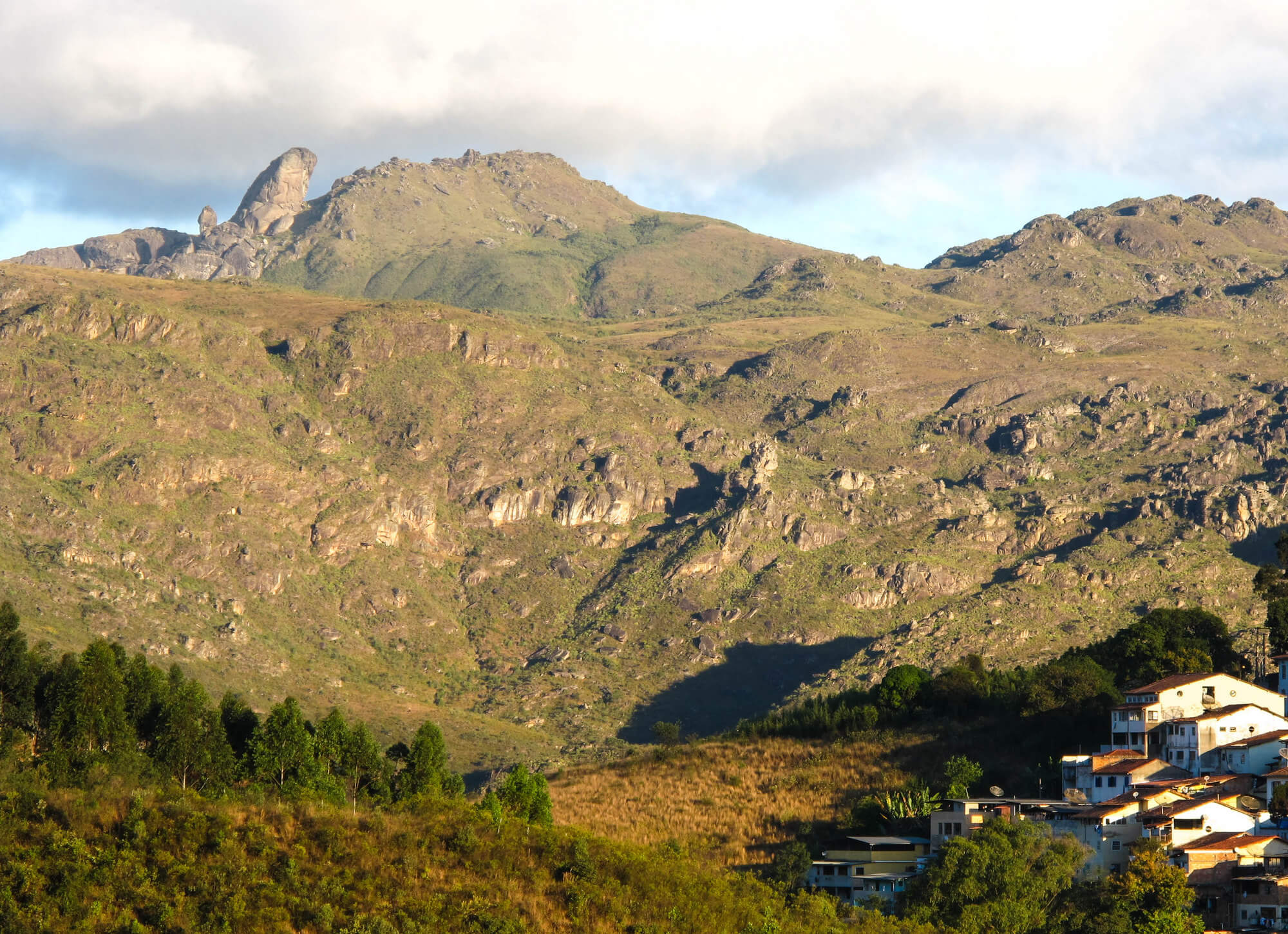
From Tiradentes Square, the town splits in two directions. If you’re facing the Museu de Inconfidência, with the white Mineralogy Museum behind you, to the left is the St. Francis of Assisi church and handicrafts market as well as charming, quieter streets. As you descend from the square to the handicraft market and Church of St. Francis of Assisi, you pass many historic houses and a view of the nearby mountains and the famous shape of the peak of Itacolomy, which formerly served as a handy landmark for gold seekers trying to find their way back to Ouro Preto.
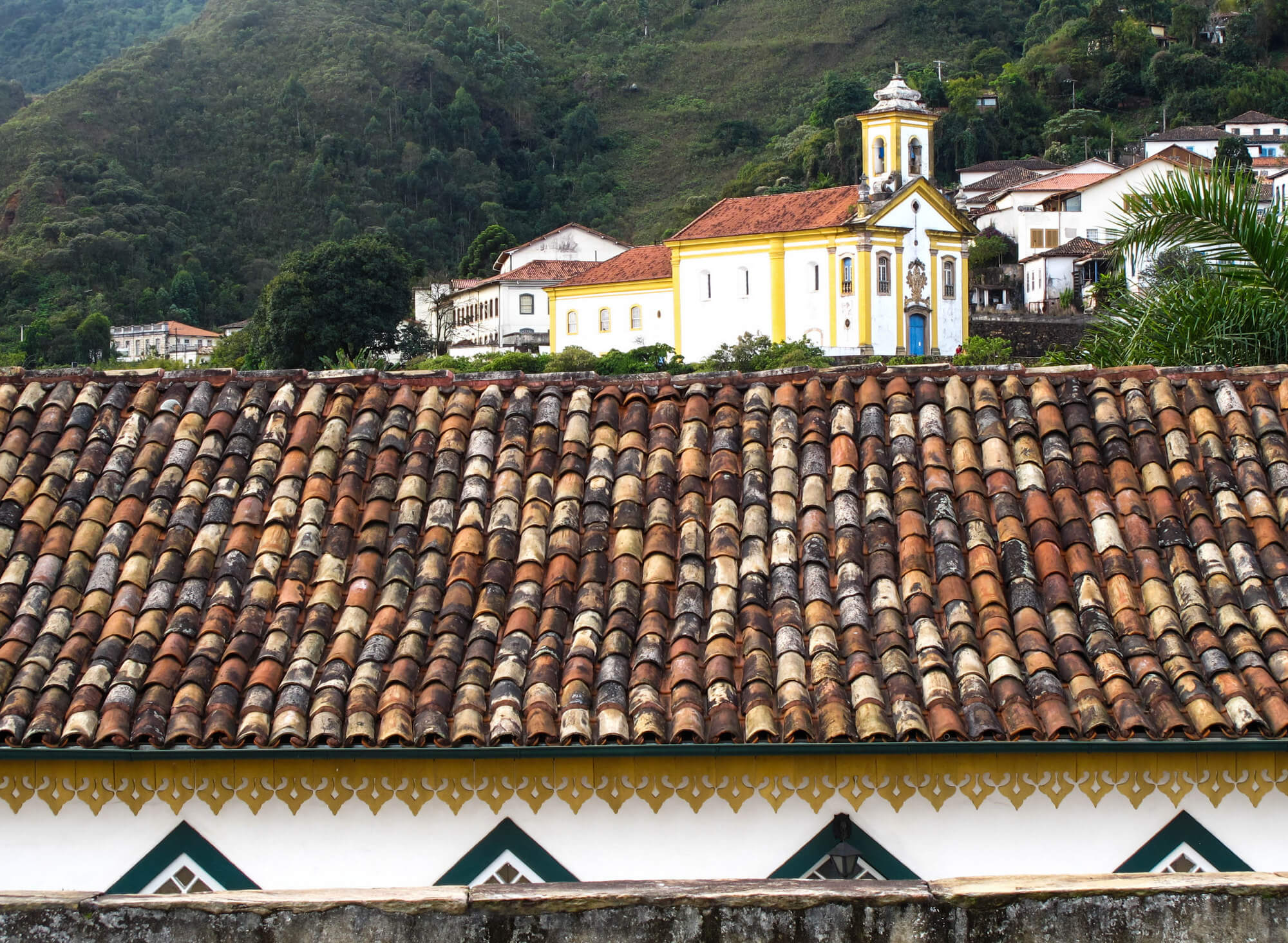
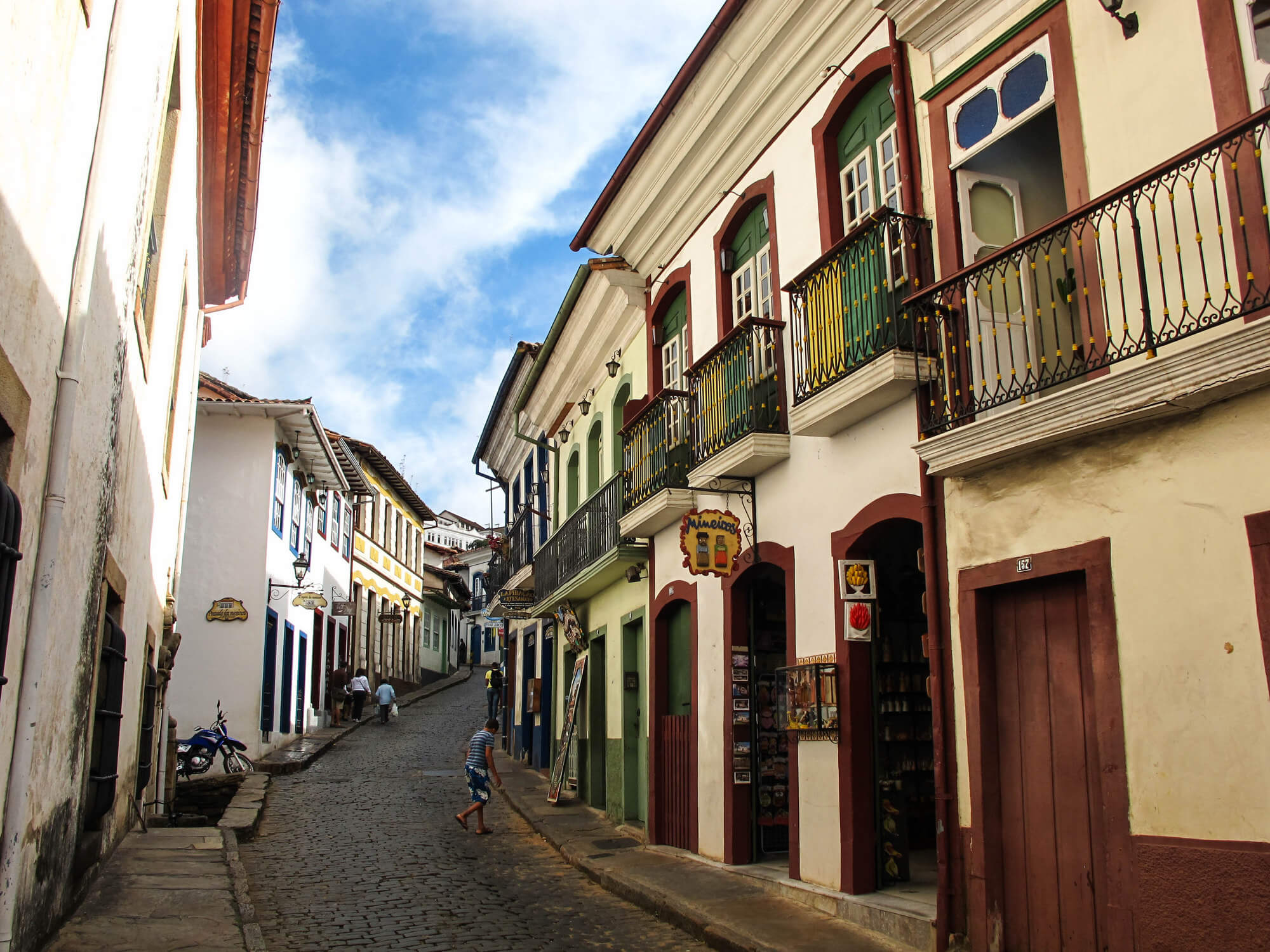
The rest of this side of town is filled with hilly streets of historic houses, artisan shops, and occasional interesting landmarks, including the restored Igreja Nossa Senhora da Conceição.

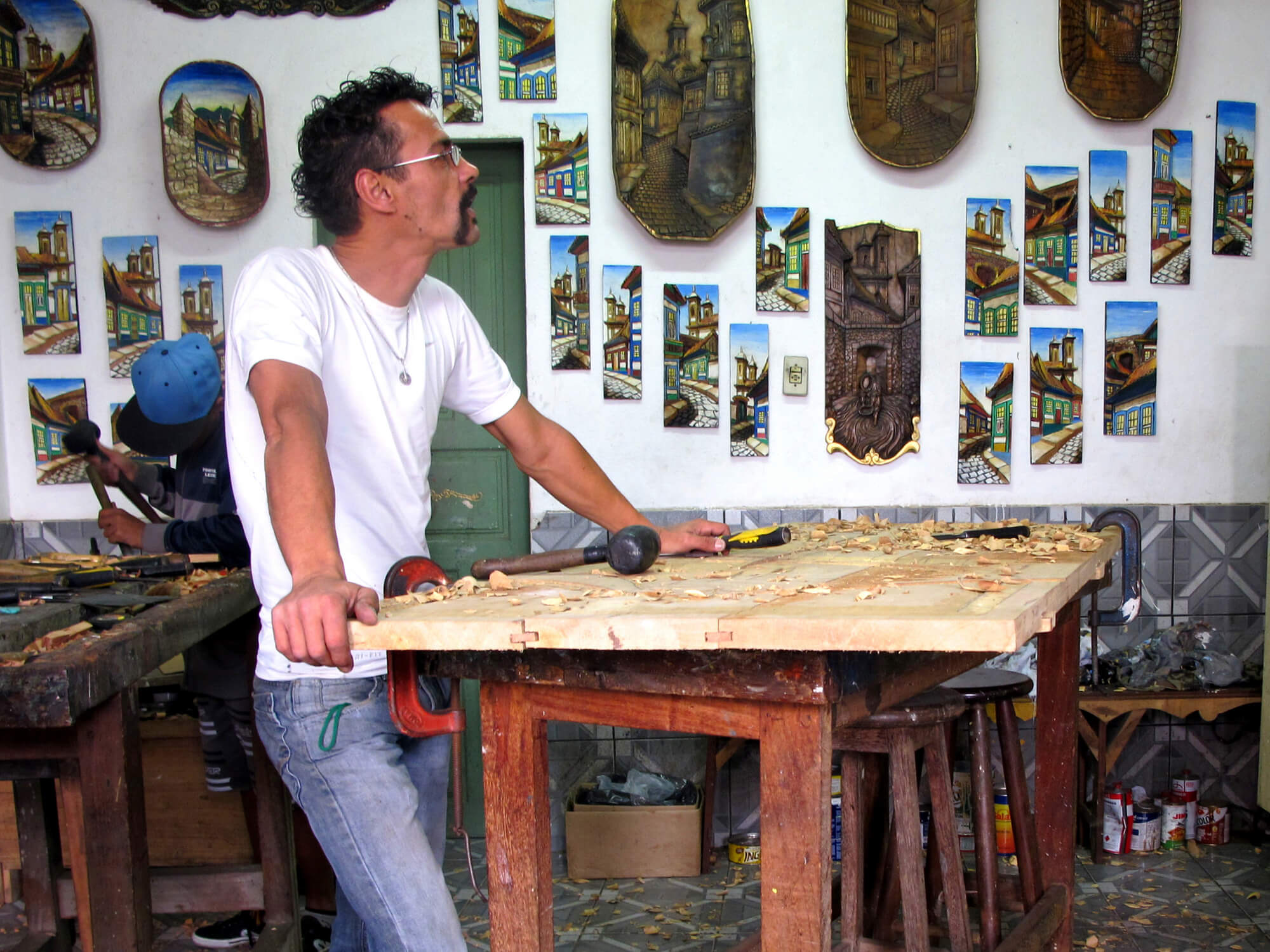
On the other side of town (if you’re in the main square facing the Museu de Inconfidência and descend to the right) is the city’s second most important church as well as several places of historic importance.
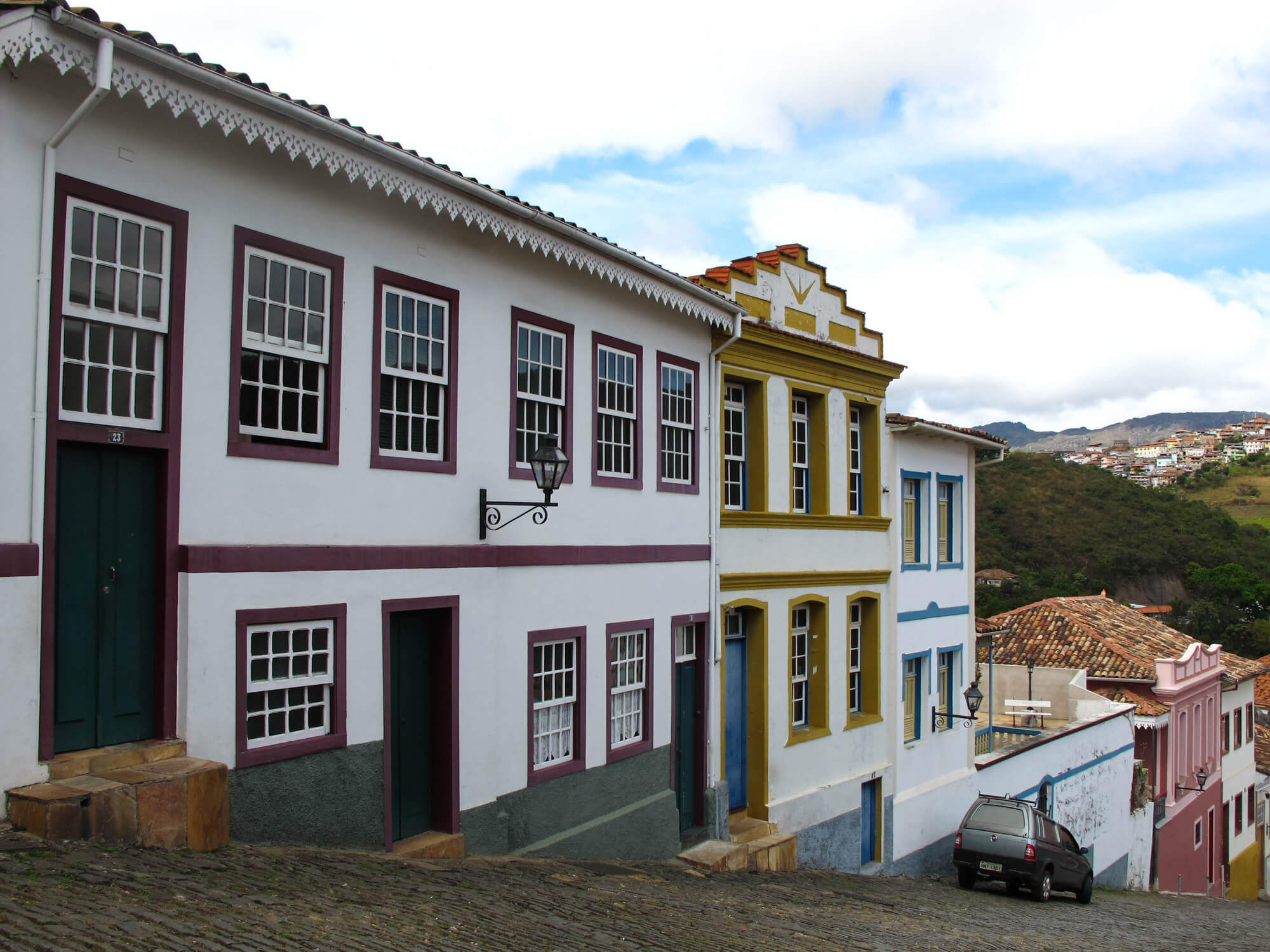
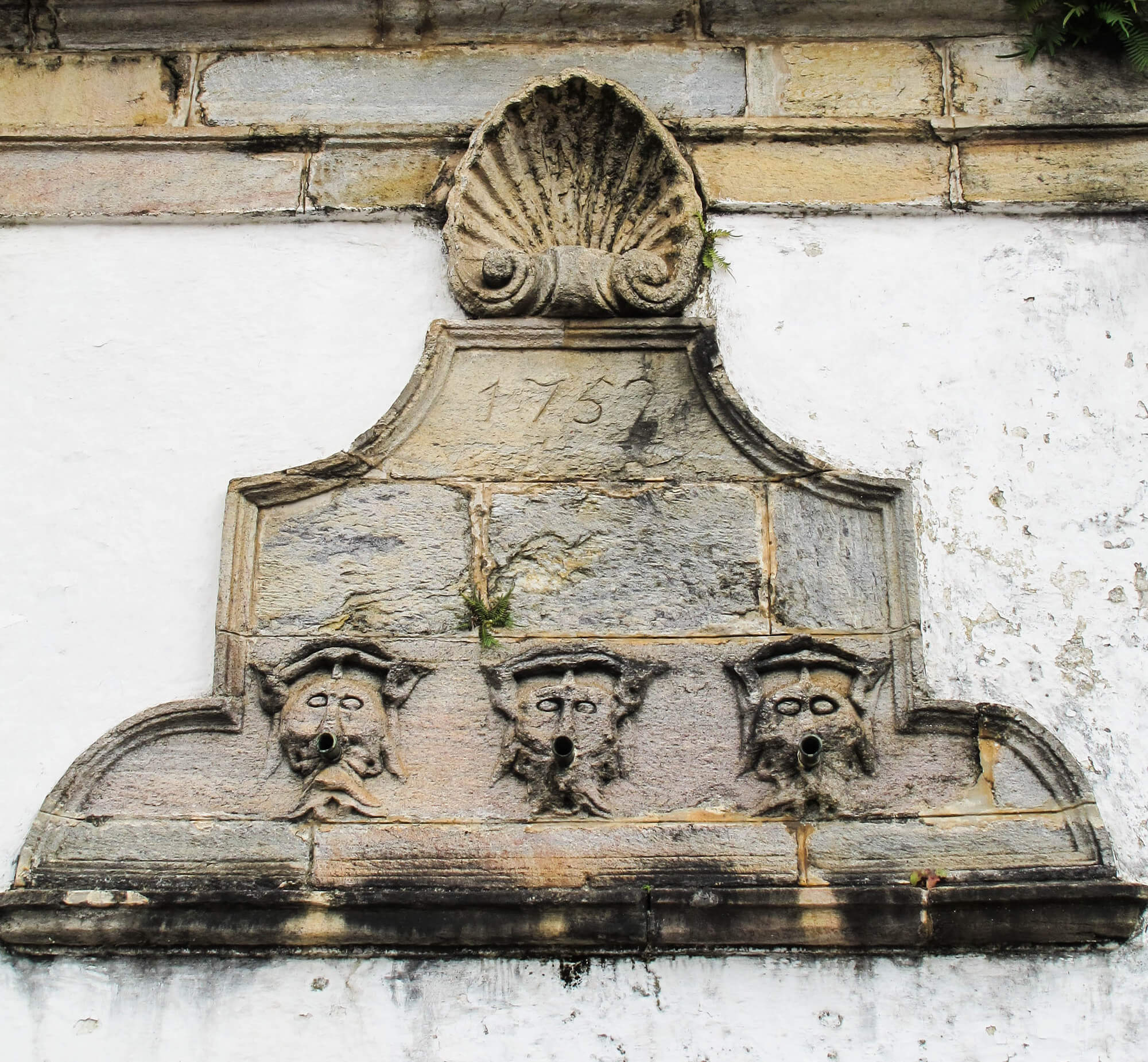
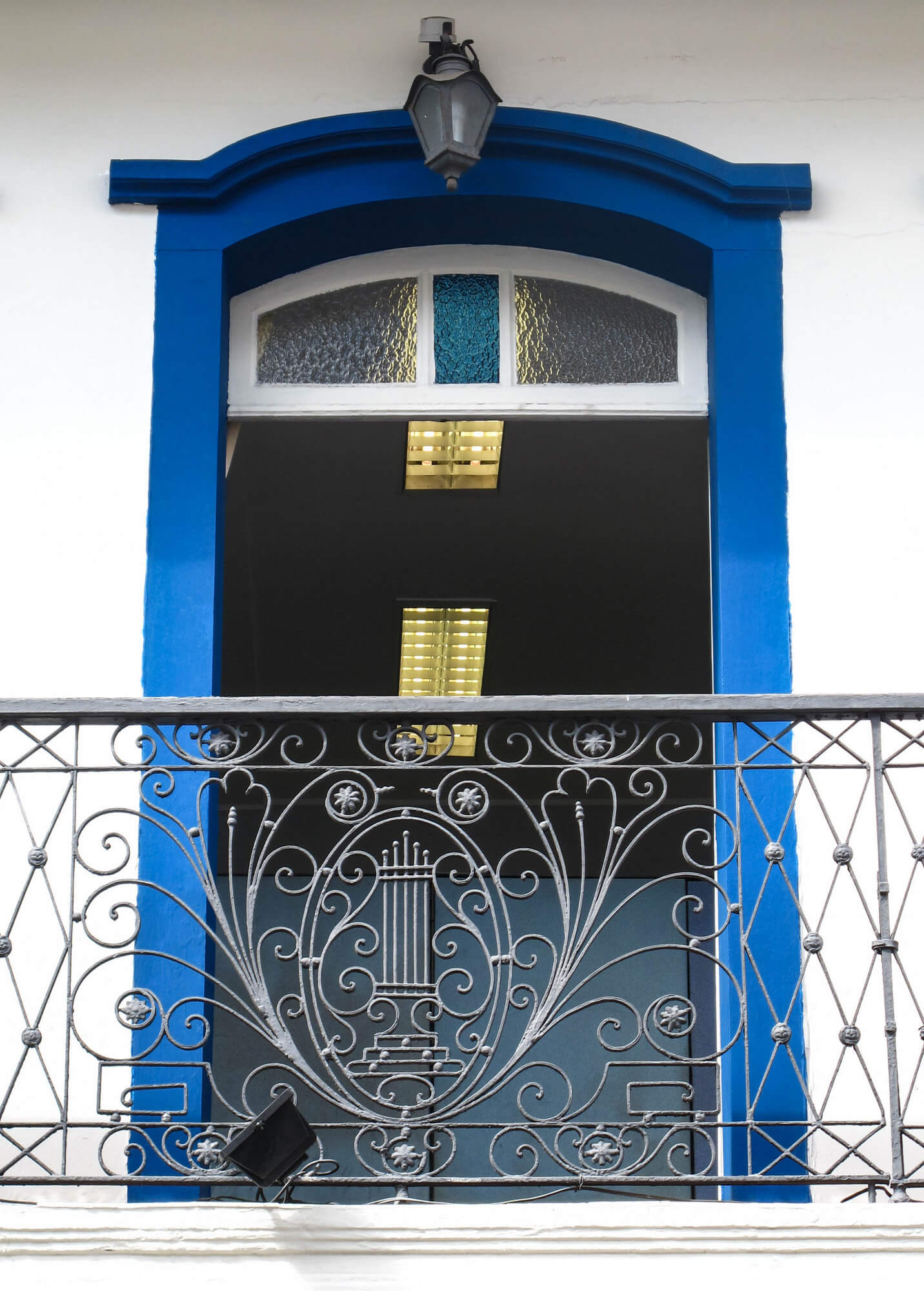
One of Ouro Preto’s most distinctive features is the decorative balconies and other exterior details. Because the city used to be so rich, the houses were decorated with ornate iron balconies and lanterns, and every house uses colorful window trim.
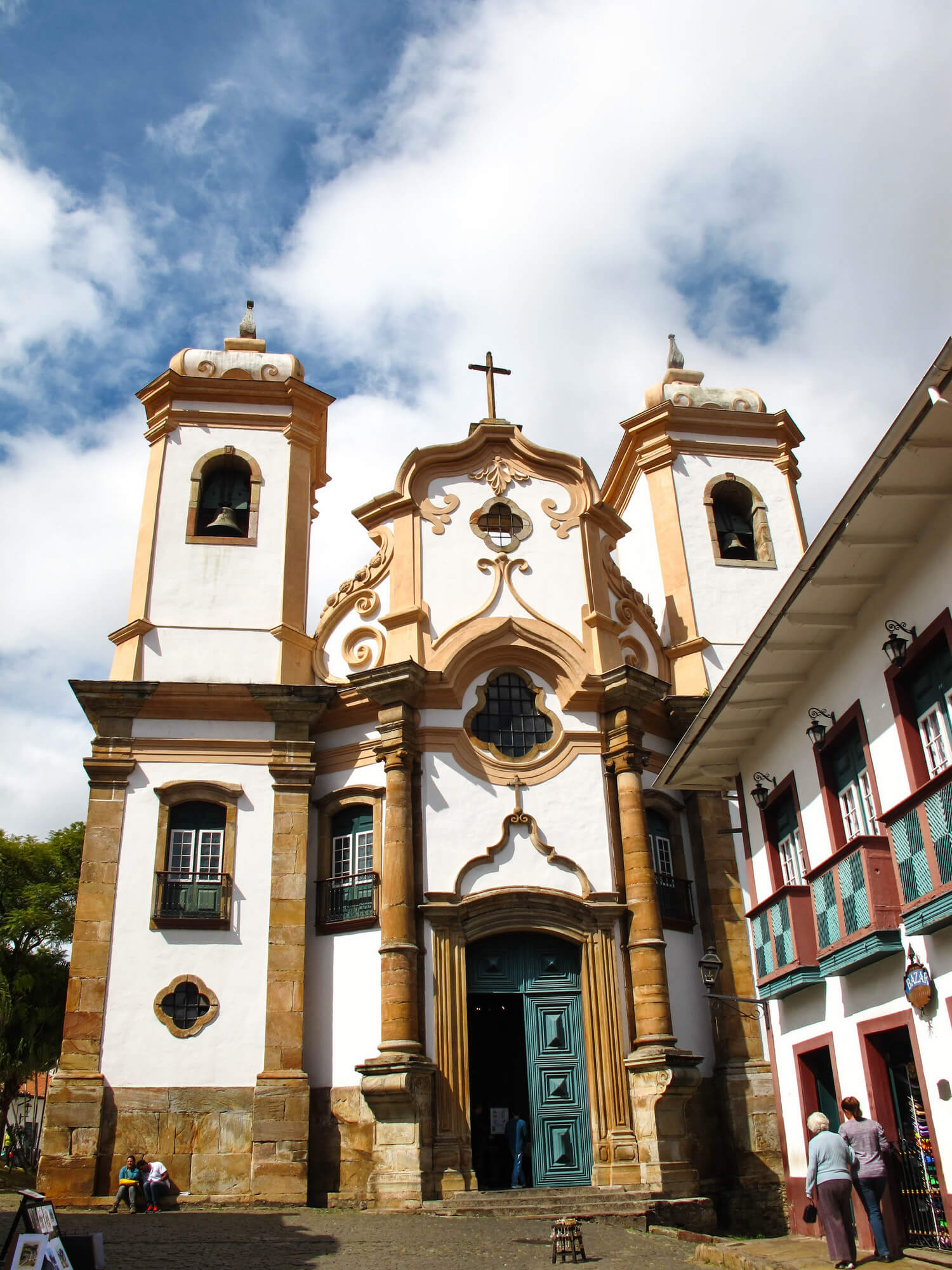
The Igreja Matriz de Nossa Senhora do Pilar (Church of Our Lady of Pilar) is known for the huge amount of gold inside, the second largest amount of gold inside a Brazilian church. The church is located in a pleasant square with shops and quaint side streets to explore.
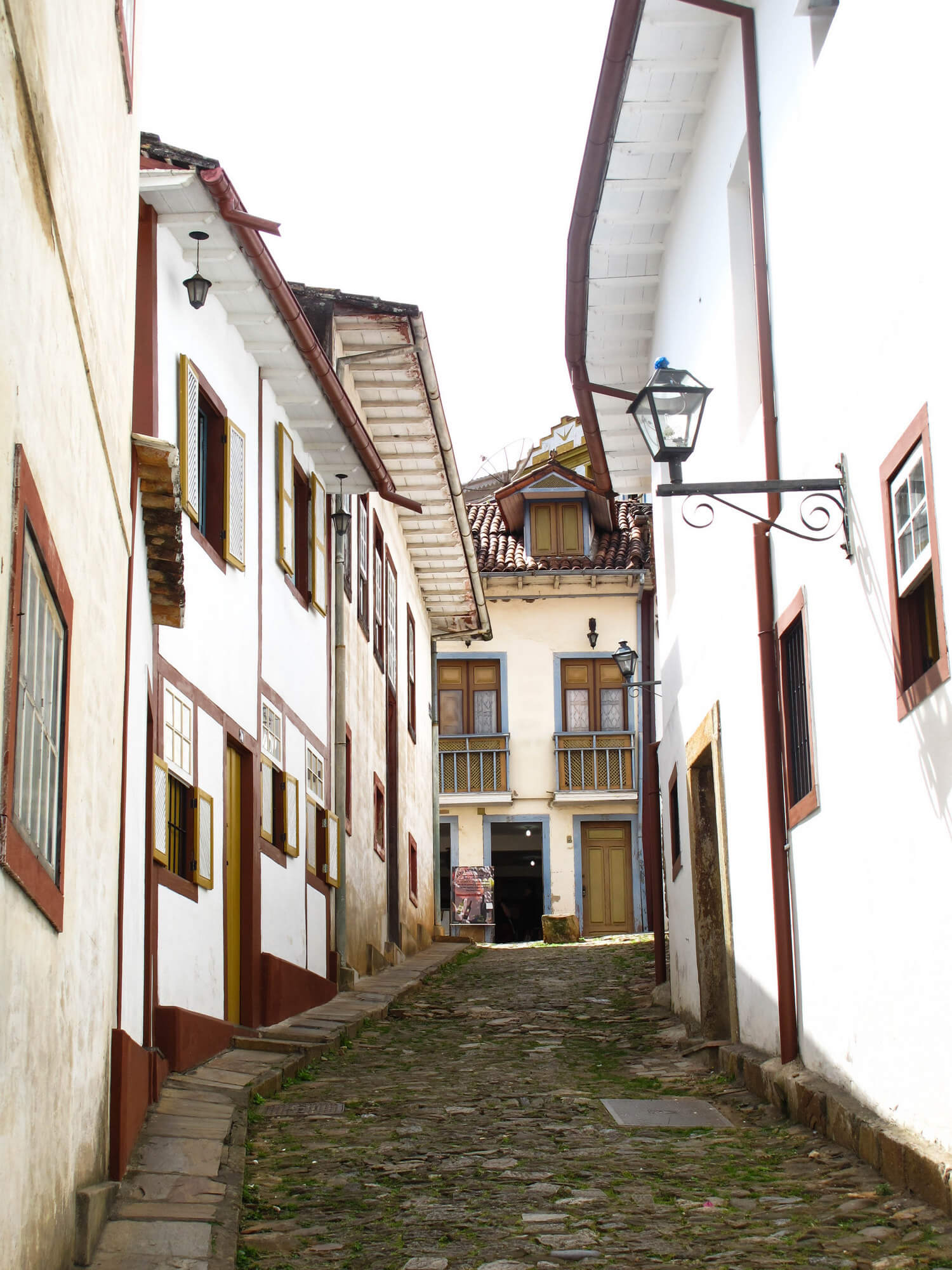
The Casa dos Contos, or the House of Tales, was where gold was originally weighed. We visited its historic rooms and the senzala, or slave quarters under the building. This was one of the most interesting places I visited in Ouro Preto, partly for the artifacts of Brazil’s sad past of slavery and for the modern art gallery also housed in this historic building.

What to Do Near Ouro Preto
Just outside of Ouro Preto is another cute but smaller historic town, Mariana. This is the oldest town in the state of Minas Gerais and the former capital. It’s worth a stroll through the center of this town before heading to the nearby mine. From Mariana, you can easily visit the nearby mine Minas de Passagem. The tour took us down into the mine on a rickety antique cable car on a 315-meter track into the earth before reaching a depth of about 120 meters.
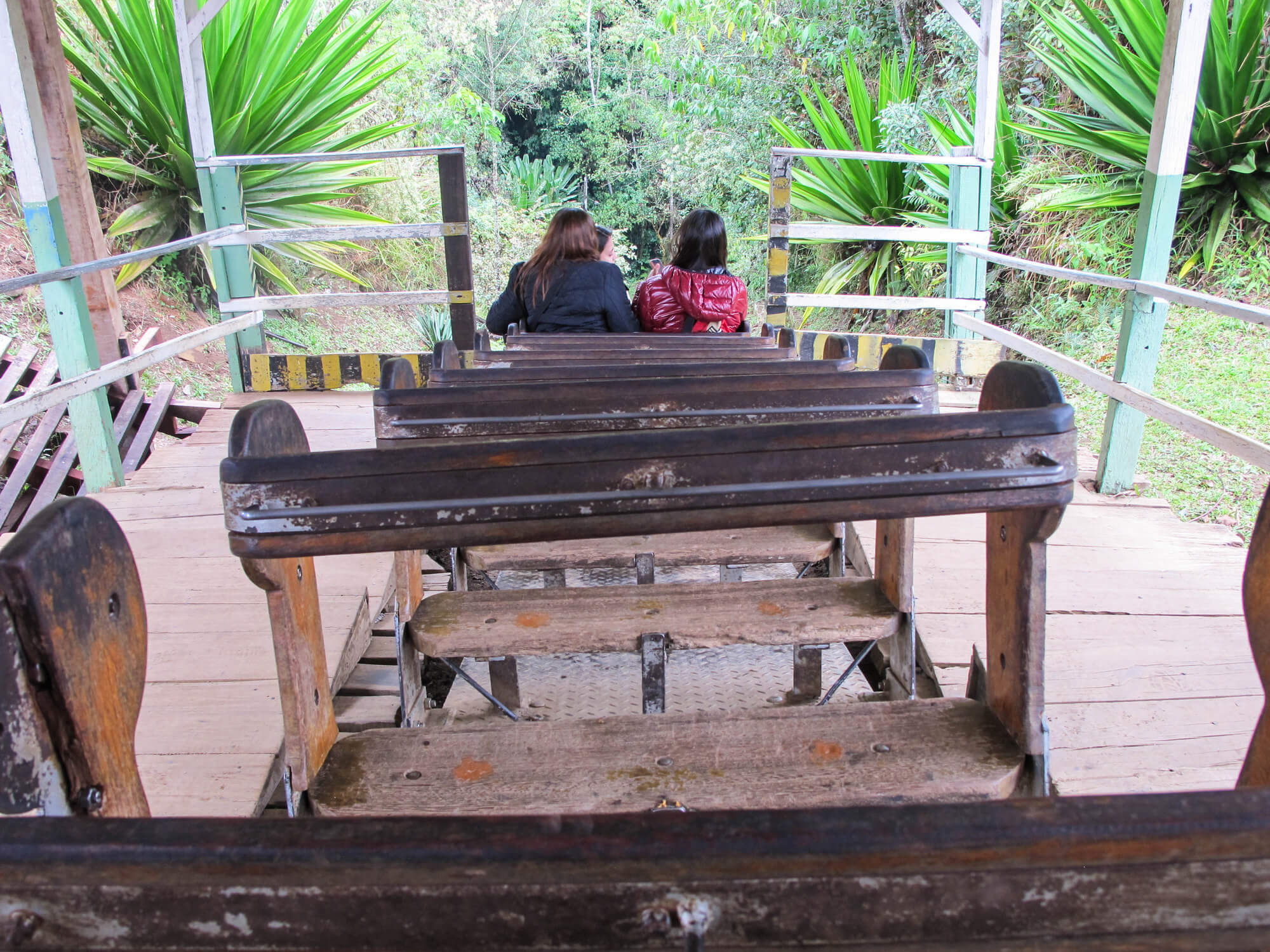
The mine produced about 35 tons of gold, much of which you can see decorating nearby churches and possibly gold-covered churches of Portugal. It is now the largest gold mine open to the public in the world! There is a crystal blue lake that visitors can even swim or cave dive in; we did neither but really enjoyed looking around a small part of the 30 km of underground of tunnels.
Another place to visit on your trip to Ouro Preto is the cute town of Tiradentes. This town of about 7000 people is about 3 hours from Ouro Preto and is worth an overnight stop for the preserved cobblestone streets filled with lovely artisan shops.
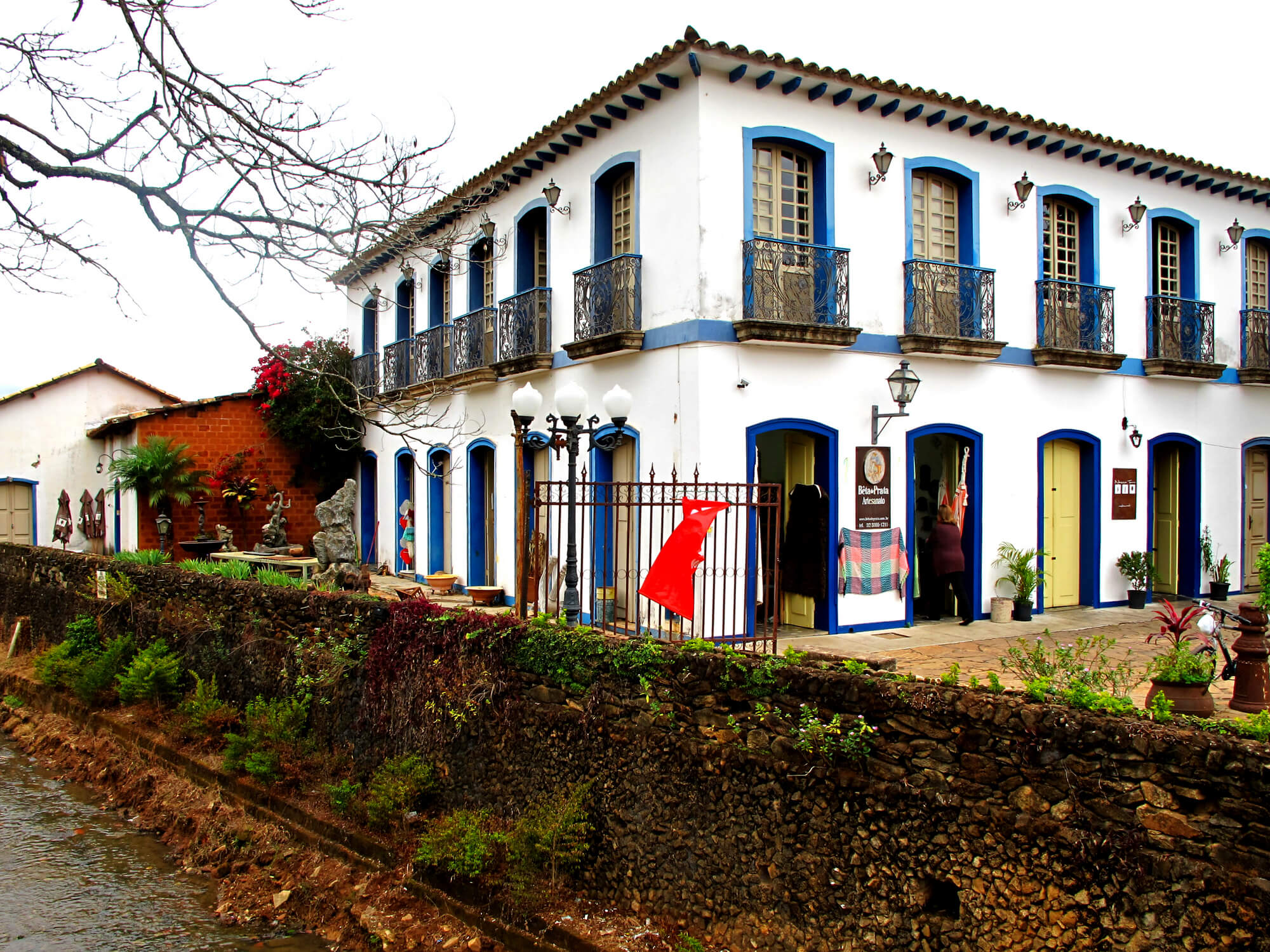
Tiradentes was founded in 1702 and named after its most famous resident, Tiradentes, a leader of the inconfidência movement, the unsuccessful attempt in 1789 to separate from Portuguese rule. The town’s colonial style is a result of the former wealth of the gold rush that occurred in this region of Brazil. Besides the web of cobblestone streets and walled alleyways, Tiradentes has a few nice churches and a museum dedicated to the inconfidência movement.
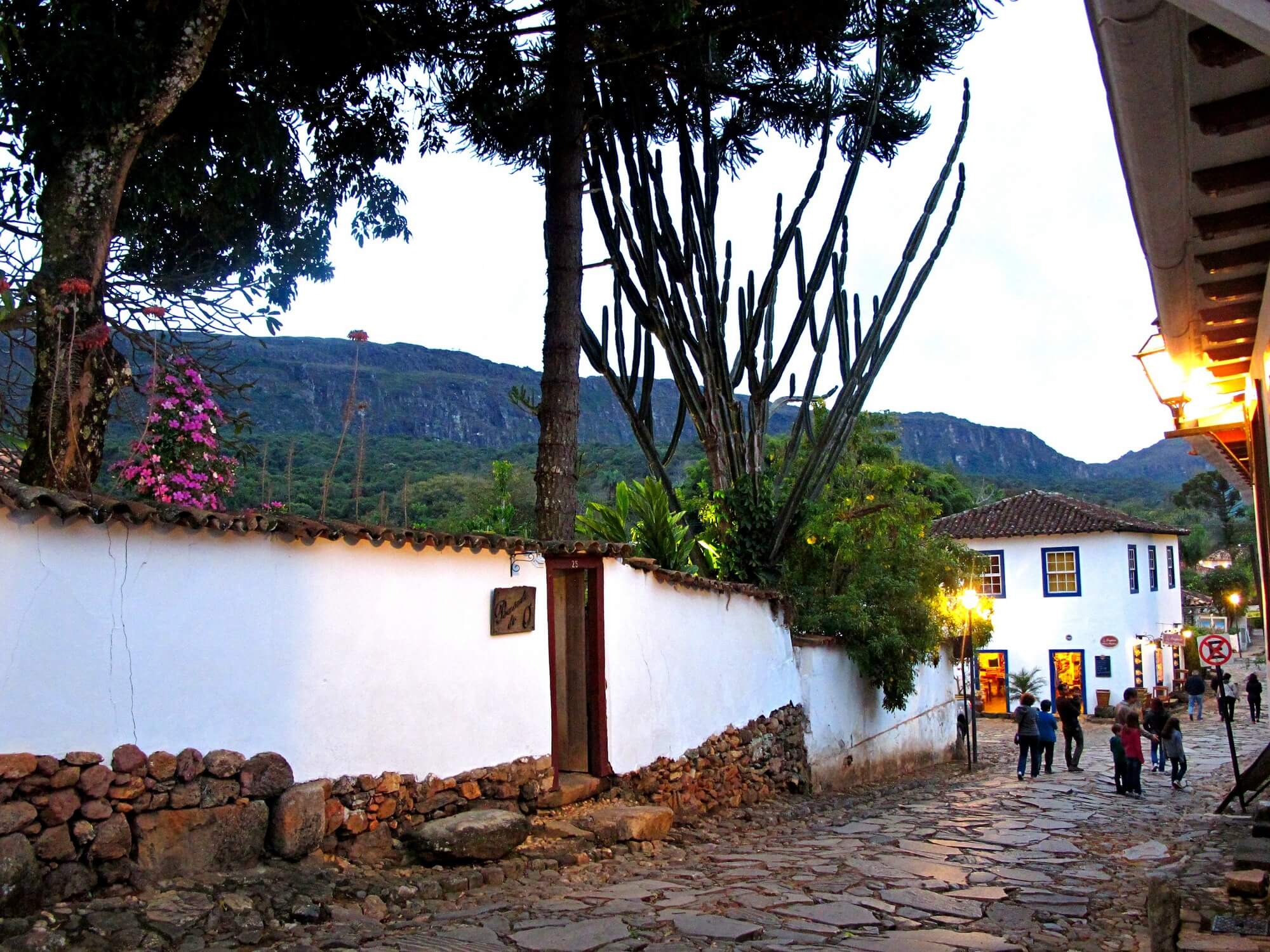
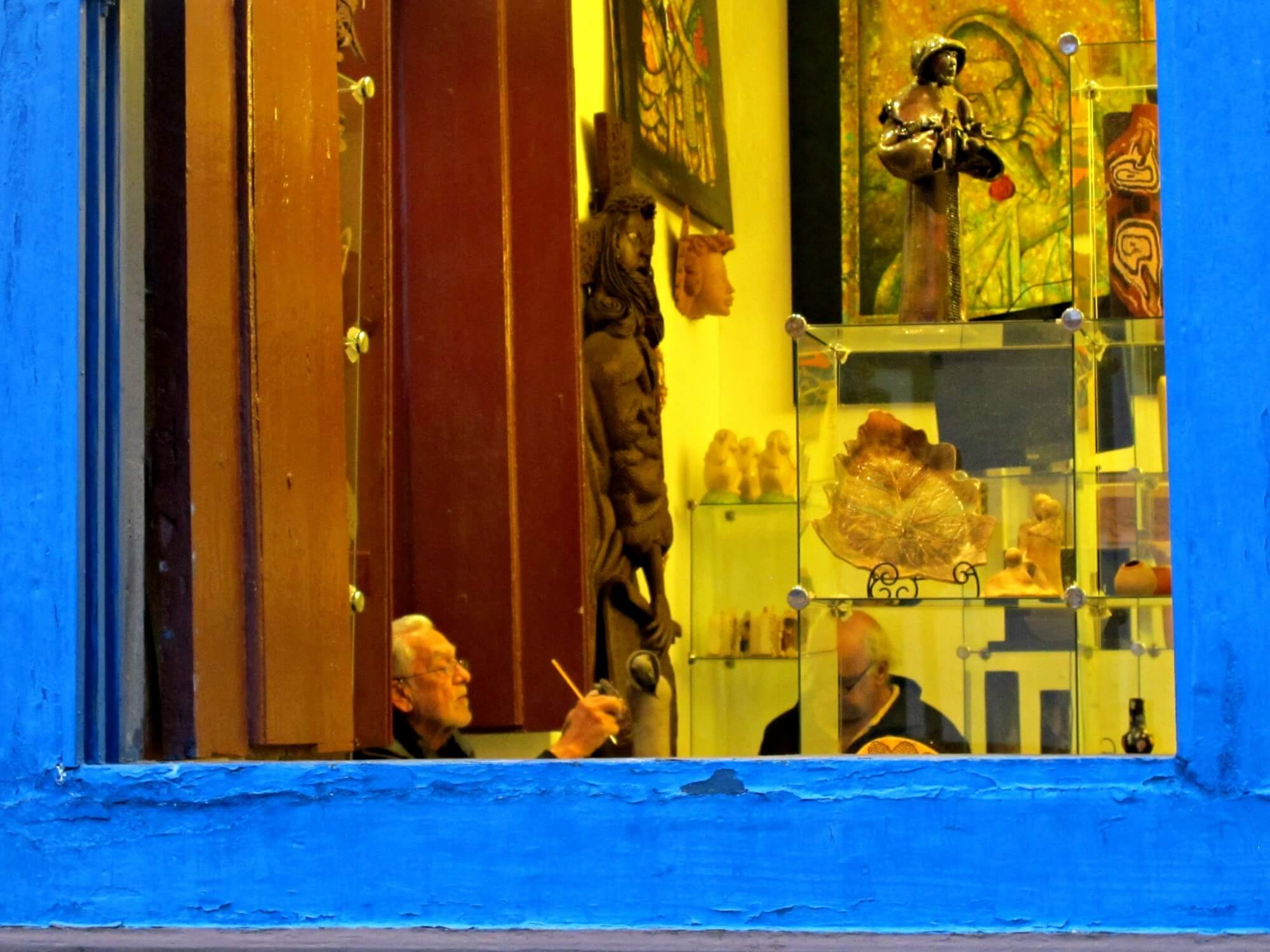
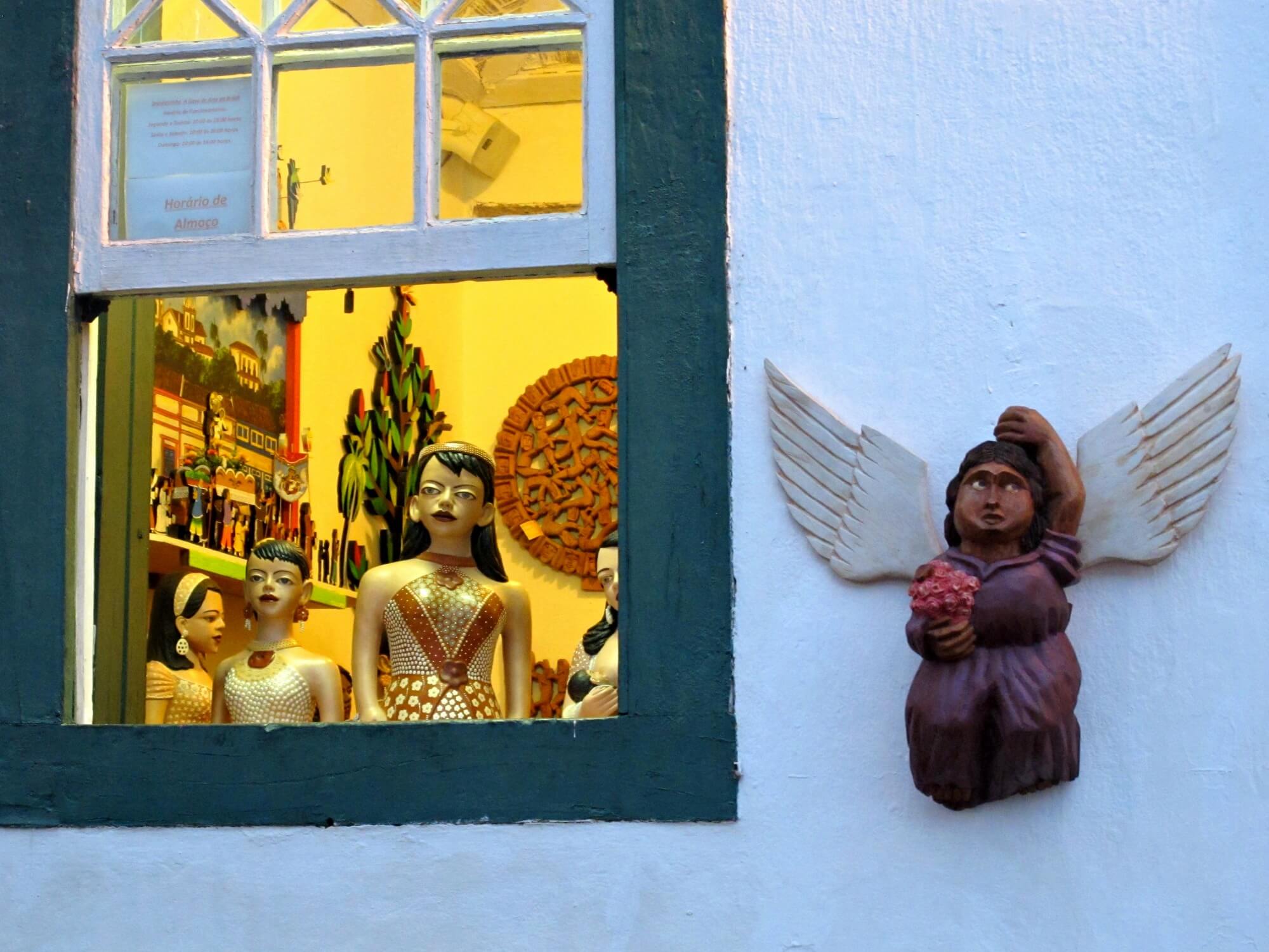
Tiradentes is the best place I have visited for Brazilian handicrafts. Artesanato refers to handmade products such as ceramics, wooden sculptures, and wall hangings made from metal or iron. Tiradentes is full of small shops selling such products that are sometimes even being made as you pass by.
Ouro Preto left a huge impression on all of us, a great departure from the hustle and bustle of São Paulo. The beauty found around every corner, the way the city is so well preserved, and the city’s history make it the most interesting place I’d visited in a long time. There are so many things to do in Ouro Preto, and the views are never ending!
The gorgeous town of Melk, located along the banks of the Danube in Austria, was the last UNESCO site I visited. Jenna, I really enjoyed learning about Ouro Preto. The colonial architecture really shows its ties back to Portugal.
Going to check out your post about Melk now 🙂 And I’m glad you enjoyed learning about this special city!
Your photos are stunning!!!! What a gorgeous city. We’ll definitely have to try to get there when we finally get ourselves to Brazil.
Thank you for the kind words! When you go to Brazil, a road trip in Minas should definitely be on the list.
Wow, this city looks pretty stunning! And I agree, it’s probably even more beautiful than Paraty!
Well, Paraty is pretty beautiful, especially because of it being on the water and the mountains in the background, but I think Ouro Preto is maybe more impressive because it seems to go on and on and has so many large monuments and churches.
Jenna, Ouro Preto’s graceful architectural details (I love the trio of faces and the gingerbread-like homes) contrast nicely with the rugged landscape. With many destinations becoming museum-like tourist towns, It’s also refreshing to hear that it’s been able to maintain its lived-in character. Even though (I think) you did your own driving on your family road-trip, did you hear anything about what it’s like getting to Ouro Preto (or to other notable spots in Brazil) by using mass transit?
There is a university there, which I think helps the city maintain its character. Your question about traveling around Brazil with mass transit is a good one! I have asked my family members about this a lot but we always drive so I have no experience. Brazil is such a huge country that many people fly from one city to another (e.g. from Sao Paulo to Rio). The bus is a common way to get around, too. My family members sometimes take the bus to visit family in other cities. I hear people talk about taking the train but have never seen one or heard first-hand accounts. I’ll try to find out more about getting to Ouro Preto and update this post.
Was the train worth it?
Are you talking about the train down into the mine? Yes, it was worth it!
When I’ll travel to Brazil, I’ll make sure I won’t miss out on Ouro Preto!
Looks so beautiful and when I first found out about it a few years ago, I couldn’t believe my eyes…
Nice photos you have there 🙂
Thank you! You will love it.
I traveled to Ouro Preto in September 2014. It was a great place to visit. I was very impressed and if you find yourself in Brazil this is a place you should make every attempted to visit.
I agree. A beautiful, historic city
I am from Brazil, but I never traveled to Ouro Preto…Well…One day I’ll go. (Sorry,I don’t have a good english)”Que Deus me livre e Guarde, eu não vou ficar sem ir!”
It happens that we often don’t visit the places that are right in our own countries. Of course in Brazil, that can also happen because places are far from each other. Thanks for the quote in Portuguese. I enjoyed it 🙂
Hello I’m from Ouro Preto. Congratulations for your post! 🙂
It’s a truly beautiful place that I enjoyed visiting this year!
Hi Jenna this was a great post! Convinced me that I should stop over in Ouro Preto on the way over to spend a few days in Santuario do Caraca. My wife and I are having trouble figuring out transportation around the area. I wondered if you thought it would be possible for a foreigner to attempt it as a road trip. We’re from Malaysia and I’ve driven in Indonesia as well. Would we struggle to to a road trip from Belo Horizonte through Ouro Preto and the Sanctuary then back? I’m asking as we’ve heard so many warnings about driving in Brazil but I wondered if it’s much different from many places in Southeast Asia. Thanks so much!
Hi Gerald, Driving in Brazil is okay but it really depends on the road. Some roads are crowded and you have to be careful of the trucks, which move very slowly. There are also many radar checks and places where the police are stationed on the roads, so you have to be very careful to follow the speed signs. I will check into the road that goes to the places you mentioned and will comment again.
nice sharing, I also spent a really good time there during my last summer holidays and came back with many pleasant memories.