
The David Statue: The Story Behind Michelangelo’s David
Yesterday as I was leaving the grocery store, I saw a bumper sticker that said “EARTH without art is just ‘Eh'”. That sticker reminded me of what kept going through my mind as I began reading Monuments Men and watched the movie, the story of the efforts to save Western art from the Nazis in World War II. It’s hard to imagine our world if those important masterpieces of Western art like the David hadn’t survived the thievery of the Nazis (in fact, a few didn’t).
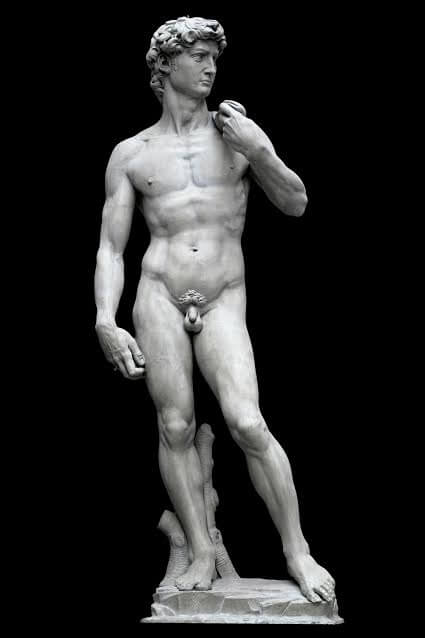
One of Western history’s most famous and loved symbols is Michelangelo’s David. If you’ve seen it in person, you know that seeing this monumental work in person is an experience.
Where is the David located?
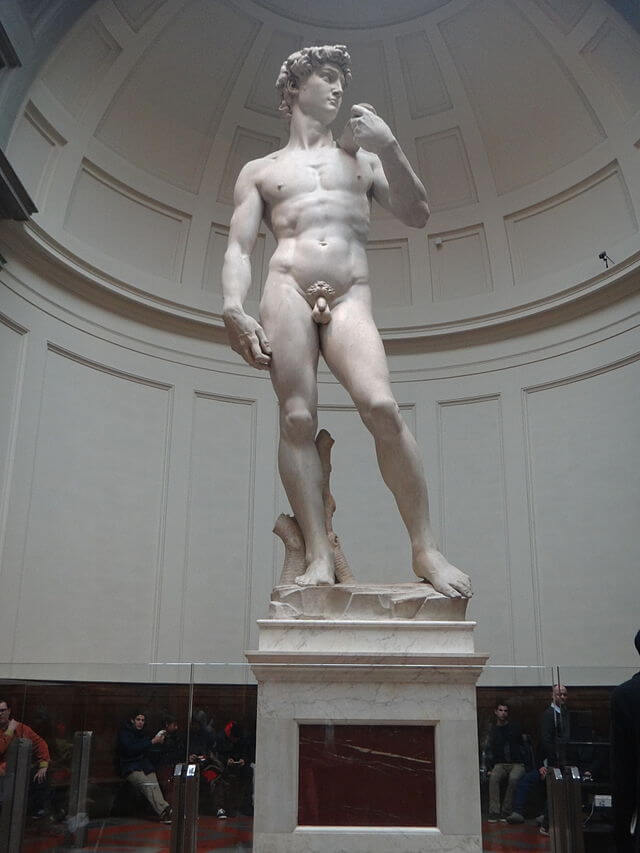
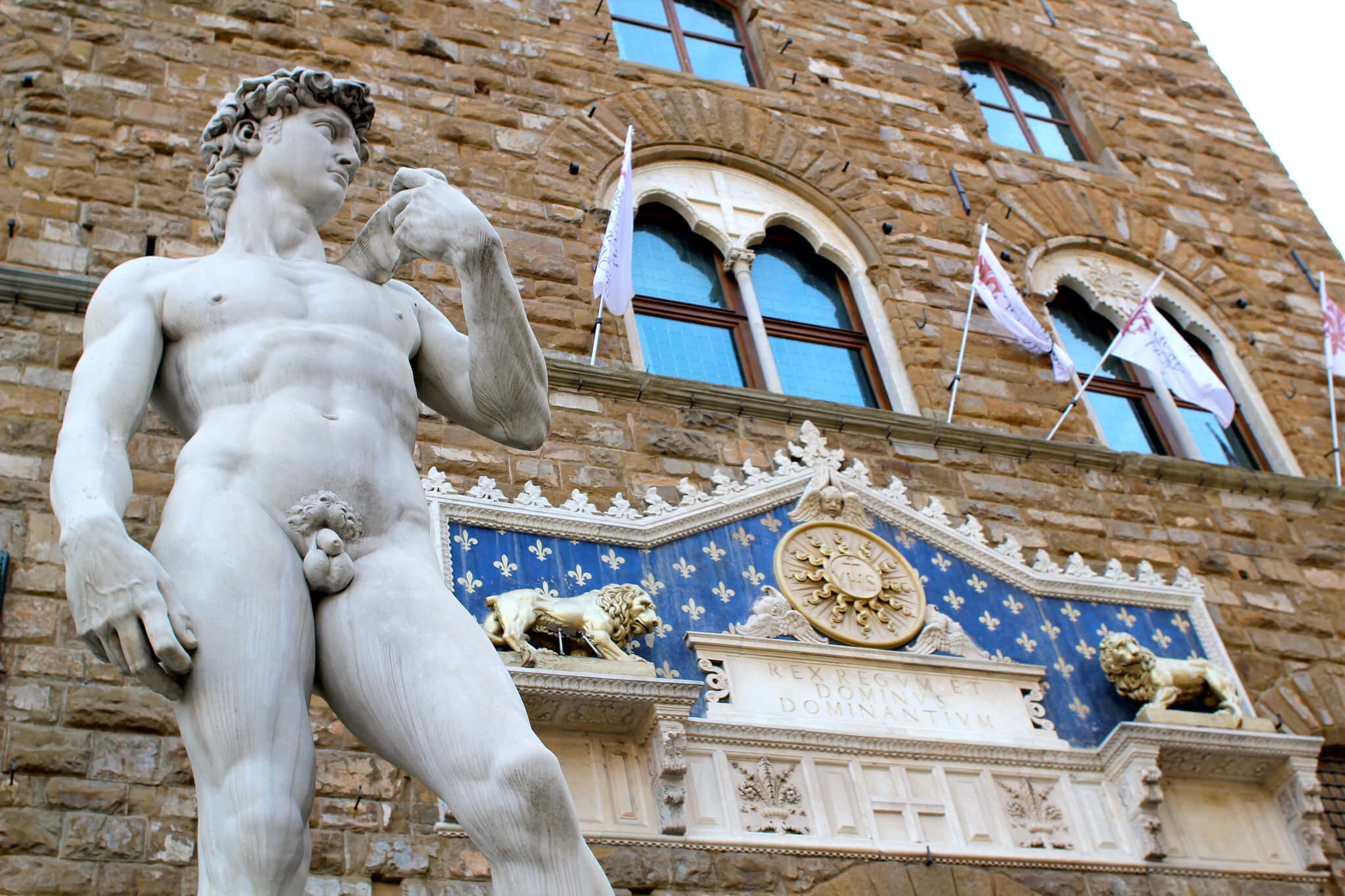
The original David statue is located inside the Galleria dell’Accademia in Florence, Italy. You might get confused because there are copies, including one very impressive one outside the Palazzo Vecchio in Florence, but the original is inside the Accademia museum, and you must pay to enter and see it. Seeing David in real life is definitely one of the best things to do in Florence — don’t miss it!
Why is this statue so important?
Michelangelo’s David is one of the most popular sights in Italy and a symbol of both Florence (even of Italy) and the Italian Renaissance. Even more important, the David is one of the purest representations of the Renaissance ideal of human potential. Yet even for those who have no background knowledge of the Renaissance, the David is considered a must-see.
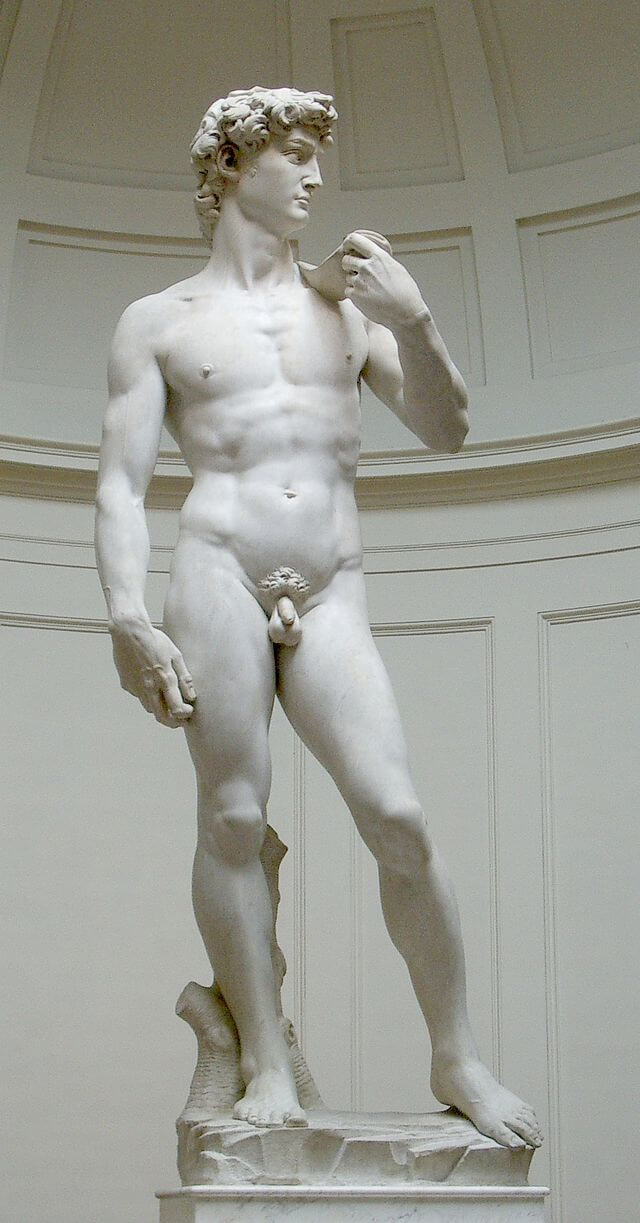
While art is a deeply personal thing — what one person finds deeply moving, another person might find boring — the David is a work that universally inspires awe.
But why? Is it its sheer size? I doubt it because Christ the Redeemer is almost 5 times the size of the David, yet the sculptures themselves cannot be compared in terms of quality or inspiration. Is it the quality of the work? Partly. Is it the perfection of the human form represented? Partly. Is it the idealized representation of male beauty and youth? Perhaps. Is it his stark nudity? I would say so.
Basic facts about the David:
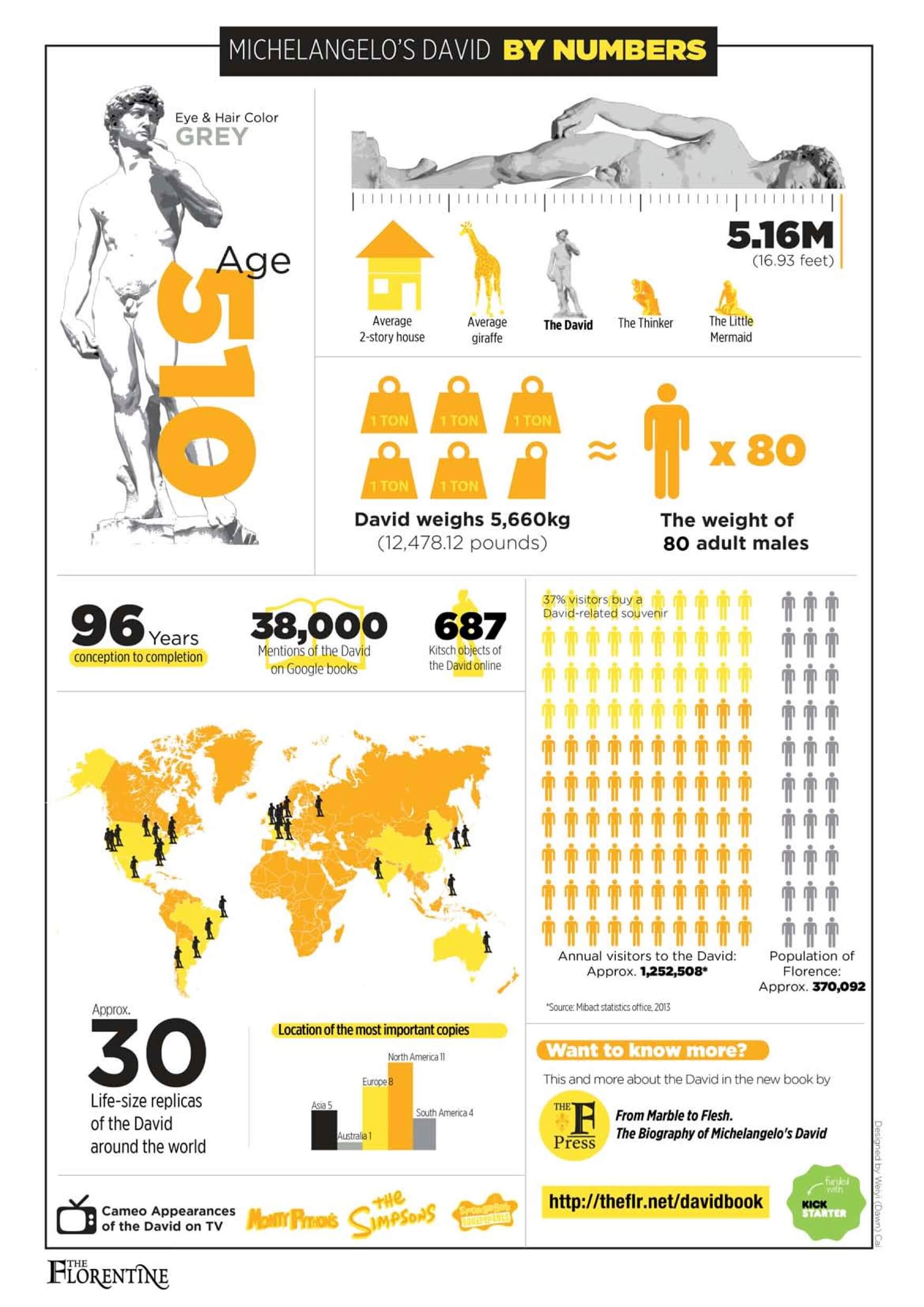
The statue is almost 17 feet tall
It used to stand outside the Palazzo Vecchio in Florence but was moved inside the Galleria dell’Accademia in 1873 to protect it from damage.
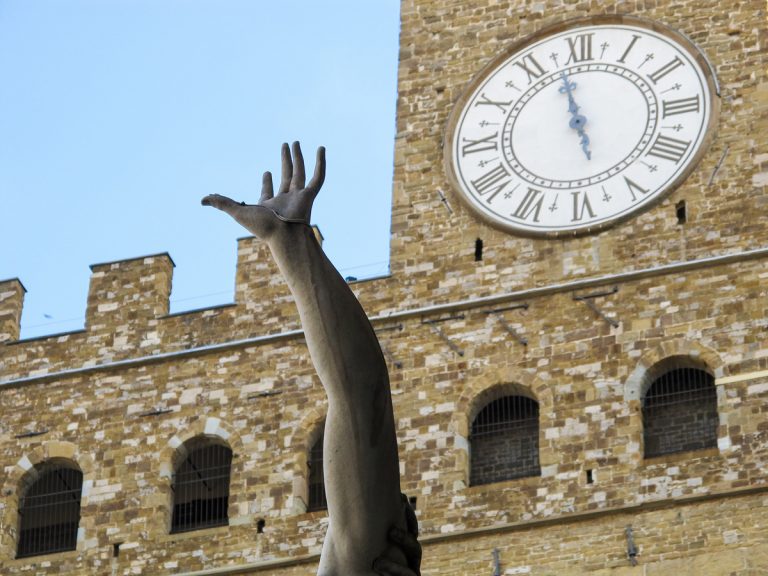
In 1910, a replica of Michelangelo’s David was placed outside the Palazzo Vecchio, where it once stood. This copy, which stands alongside several important works from the Renaissance and later, is one of Florence’s best known sights.
Michelangelo worked on David from 1501 to 1504.
Was the David carved from one block of Carrera marble? Yes, it was!
The marble had actually been worked on and was considered flawed before Michelangelo got his hands on it.
David was originally meant to stand on the side of the Duomo.
Where can I learn more about Michelangelo’s David?
Art historian and Rhodes College professor Victor Coonin seeks the answers to those questions in his biography of Michelangelo, From Marble to Flesh: A Biography of Michelangelo’s David. He sees the David as having a story, a biography, with several phases: origins, adolescence, maturity, midlife crisis, and the golden years.
Because this statue had such an important impact on the society in which it was created, the idea of “life phases” makes sense, starting with conception– Michelangelo’s vision for the piece–and continuing with its execution and later role as a symbol of Florence’s power.
Besides the fact that the David was the first free-standing colossal nude sculpture since Classical times, it held particular importance for Florence as the symbol of the strength of the Florentine state in defense against neighboring enemies. For that reason, it was originally placed outside the Palazzo Vecchio in the town square of Florence. Now a copy stands in its place.
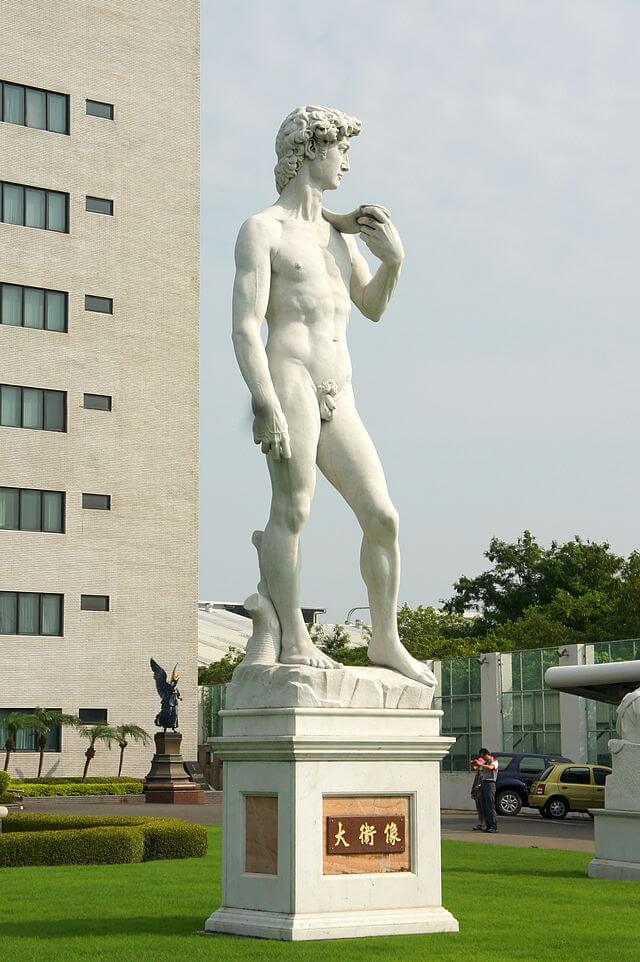
In Coonin’s book, the last phase explores the role of David in the present day, when copies of the David continue to pop up around the world and his image makes all kinds of appearances, even in tattoos. Yet after 500 years, the David, like no other piece of Renaissance art, continues to inspire awe; people connect to it more than perhaps any other work of its time.
By bringing the present day into the discussion and showing the David’s influence on modern-day culture, Coonin shows us why this sculpture from 1504 is still relevant in today’s world.
Tell me, have you seen David? In your opinion, what is it about this sculpture that inspires such awe?
A truly excellent review, thanks Jenna!
Thank you!
I haven’t seen the David myself, but the first thing that comes to mind is how perfect and detailed he looks and how much confidence he exudes – he truly is an ideal of human potential as you mention. Great post, Jenna – it’s different, I like that!
Thank you! I’m glad you enjoyed it 🙂
Great article Jenna! I like your opening reference to the Monument Men and the challenge of whether any art is so valuable and inspirational that it is worth a human life to save. The David is definitely one of those perfectly executed, enigmatic, universally-appealing pieces worth protecting. I bet he is tied with the Mona Lisa as the most recognized work of art ever!
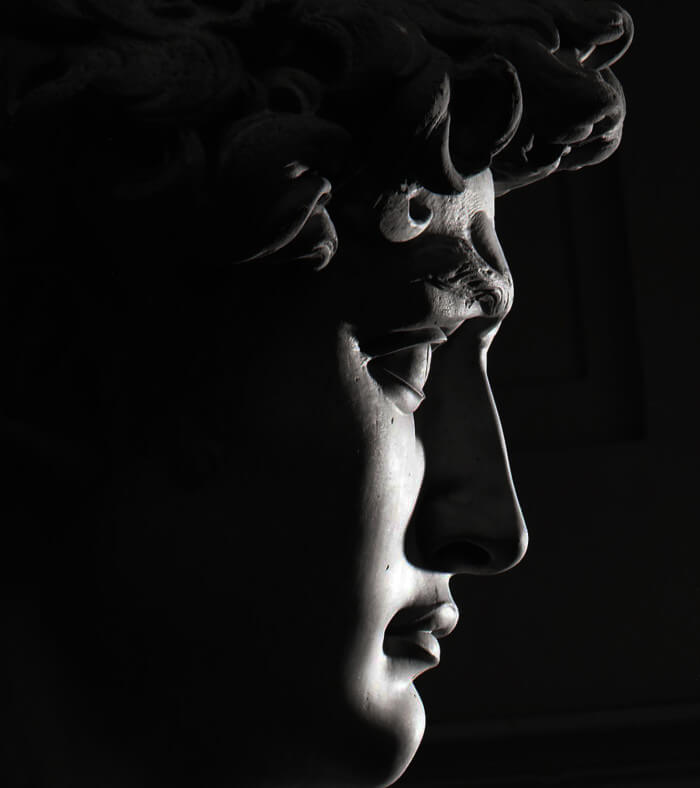
We always see images of David from the front, but I loved visiting him and being able to talk around. Michelangelo really created a three-dimensional man so it’s great to enjoy all the angles and views. I’ve always liked his furrowed brow and distant expression – perfect symbol of the Renaissance Florentines and more broadly, the embodiment of cautious preparation.
I agree about seeing it from all sides and the expression–the furrowed brow is truly special.
We will be in Florence next week! I’m sure inspired after reading this! I can’t wait.
I can’t believe you’ll be there next week already! So excited for your updates!
I haven’t seen the real David, only the replica standing outside the Palazzo Vecchio in Florence.
I remember I was shocked that the David was chosen as a symbol for Florentine Strength instead of my preferred statue of Cellini statue of Perseus holding the head of Medusa.
While there is a subtlety to David that seems to strike the human core something about the Cellini fascinates me much more. But I’m just weird like that lol
I love Cellini’s Perseus, too!
I don’t know how many times I’ve been to Florence and I’m ashamed to say that I’ve actually never seen the original David but only the replica by the Palazzo Vecchio. Michelangelo was a genius in my view and I should pay more respect to his works and visit the real David next time I’m in Florence 🙂
It’s been many years since I’ve seen the David but it’s something I’ll never forget.
We made a reservation to see the David the second that museum opened. We didn’t spend a lot of time looking at the other works in the museum. But my wife slowly circled the David for 30 minutes. She was obsessed. I think it’s amazing how perfect it seems to be.
Good idea to go when it opens. Art is always better experienced without a crowd trying to see it, too.
The David was one of my favorite pieces of art I’ve seen while traveling so I loved reading all this extra info I didn’t know about it. Also, I had no idea that’s what Monuments Men was about – I’ll have to check it out!
David makes art so magical… and that “EARTH without art is just ‘Eh’” touched me 🙂
Have you ever thought about writing an e-book or guest authoring on other websites? I have a blog centered on the same information you discuss and would really like to have you share some stories/information. I know my subscribers would enjoy your work. If you are even remotely interested, feel free to send me an email.